
Smith & Wesson Model 65: Range Session Overview
The smith&wesson 65 range session is a stainless-steel revolver known for its traditional design, durable construction, and place in the history of double-action service handguns. A range session with this revolver offers an opportunity to appreciate its mechanical design, classic appearance, and historical significance in a controlled shooting environment.
Design and Construction
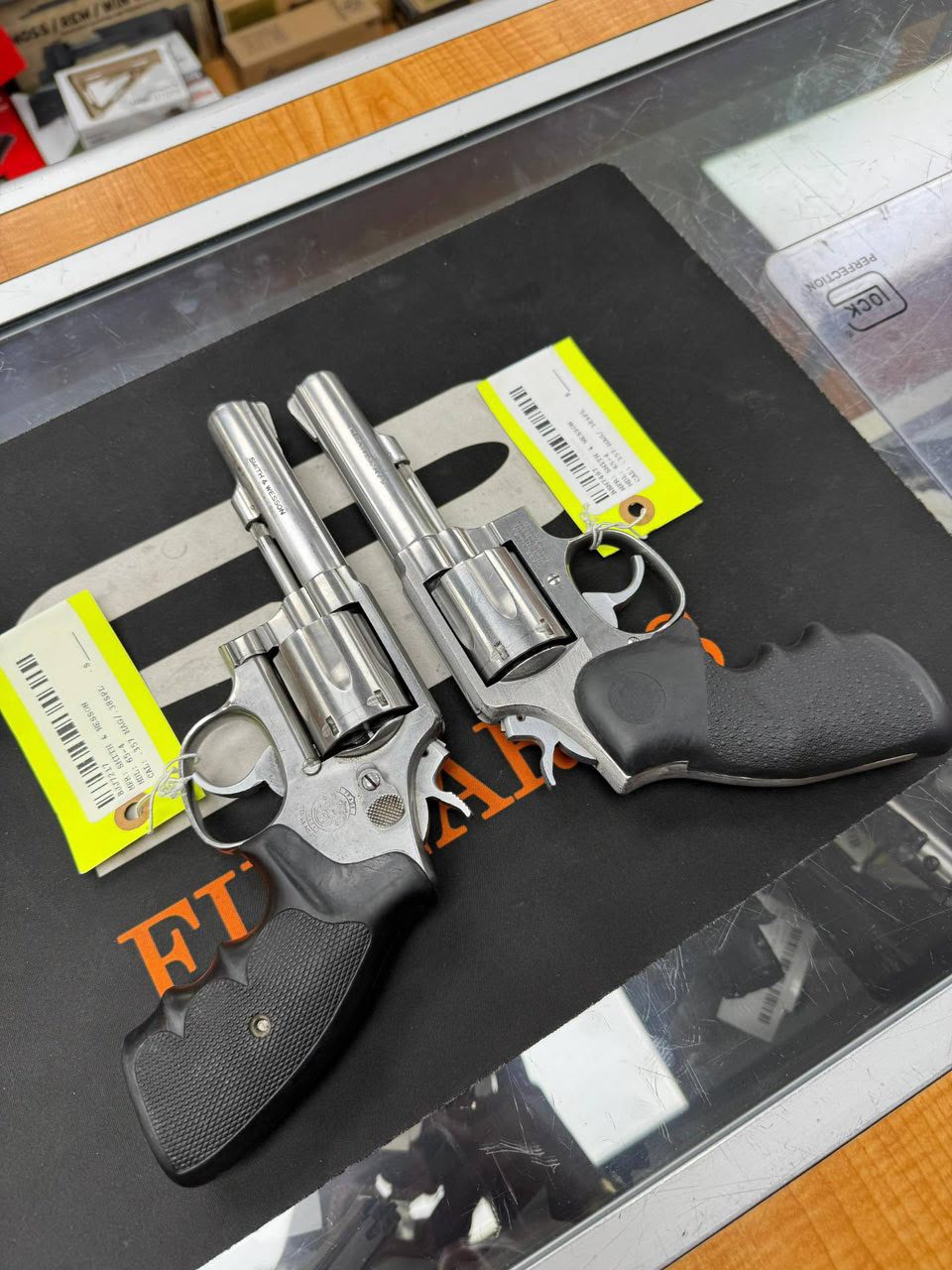
The Model 65 belongs to Smith & Wesson’s K-frame revolver family. Its stainless-steel construction gives it a distinctive silver appearance while providing resistance to everyday surface corrosion. Nevertheless, stainless steel still requires appropriate care and maintenance.
Its traditional revolver profile features a swing-out cylinder, an exposed hammer, and a conventional grip arrangement. Together, these elements reflect a design philosophy that emphasizes established mechanical principles and straightforward external controls.
Range Session Experience
A range session provides an opportunity to observe the revolver’s condition and appreciate its design under appropriate supervision. Before use, the firearm should be inspected by a qualified person, and all manufacturer instructions and range safety rules should be followed.
During a session, attention can be given to the revolver’s general handling characteristics, visible condition, and the experience of using a traditional double-action firearm. Eye and hearing protection are essential, while the firearm must always remain pointed in a safe direction.
Furthermore, a controlled range environment provides an appropriate setting for documenting the session, recording observations, and comparing the revolver’s design with other historical handgun platforms.
Historical Significance
The Smith & Wesson Model 65 is associated with the long tradition of stainless-steel service revolvers. Its relationship to the K-frame family makes it relevant to collectors interested in the evolution of police and duty handguns.
Unlike modern polymer-framed pistols, the Model 65 represents a metal-framed revolver design with a distinct place in twentieth-century firearms history. Consequently, it can appeal to both historical enthusiasts and collectors who appreciate traditional mechanical construction.
A Smith & Wesson Model 65 range session combines an appreciation of classic revolver design with the importance of responsible firearm handling. Its stainless-steel finish, recognizable profile, and historical background make it an interesting subject for range documentation and collector discussion.
Understanding the Model 65’s Design Heritage
The Smith & Wesson Model 65 occupies an important place in the development of stainless-steel revolvers. Built on the company’s established K-frame platform, it reflects a period when traditional revolver designs remained prominent in law enforcement, civilian ownership, and recreational shooting.
Its design is particularly interesting because it combines familiar revolver architecture with stainless-steel construction. Earlier revolvers were often associated with blued finishes, while stainless-steel models offered a different appearance and practical characteristics. Consequently, the Model 65 became recognizable to enthusiasts who appreciate the evolution of traditional service handguns.
smith&wesson 65 range session
The revolver’s overall form is defined by its frame, cylinder, barrel, and grip. Each component contributes to the distinctive silhouette that has characterized many classic Smith & Wesson revolvers. Moreover, the relatively traditional external design makes the Model 65 an accessible subject for historical study.
For collectors, understanding this heritage adds context to a range session. Rather than focusing exclusively on the immediate experience, an observer can also consider how the revolver fits into the wider history of handgun manufacturing.
smith&wesson 65 range session smith&wesson 65 range session smith&wesson 65 range session smith&wesson 65 range session smith&wesson 65 range session smith&wesson 65 range session smith&wesson 65 range session smith&wesson 65 range session smith&wesson 65 range session smith&wesson 65 range session.
Stainless-Steel Construction and Appearance
One of the most noticeable characteristics of the Model 65 is its stainless-steel finish. The silver-toned exterior distinguishes it visually from many traditional blued revolvers and gives the firearm a recognizable appearance.
Stainless steel is valued for its resistance to corrosion under appropriate conditions. However, it should not be considered completely immune to rust, staining, or surface damage. Environmental exposure, fingerprints, moisture, and unsuitable cleaning products can all affect the appearance of a metal surface.
During a range session, the finish can be observed for general condition and visible signs of wear. Changes in reflectivity, superficial scratches, and discoloration may be worth documenting, especially when the revolver is an older or collectible example.
Nevertheless, appearance alone cannot establish mechanical condition or authenticity. A well-presented exterior does not necessarily indicate that every internal component is in good condition. Similarly, minor cosmetic wear does not automatically mean that a revolver is mechanically defective.
For this reason, collectors should distinguish between cosmetic observations and findings from a qualified professional inspection. This approach supports a more accurate record of the firearm’s condition.
The K-Frame Platform
The K-frame is a long-established part of Smith & Wesson’s revolver history. It became associated with a broad range of models intended for different civilian, sporting, and service applications.
The Model 65 belongs to this family and shares its general design heritage. This relationship makes it useful for comparisons with related revolvers, including models that differ in finish, chambering, barrel configuration, or intended market.
smith&wesson 65 range session
The K-frame’s historical importance also reflects the popularity of traditional double-action revolvers throughout much of the twentieth century. Although handgun designs have diversified considerably, the platform continues to interest collectors because of its recognizable engineering and historical associations.
Comparing the Model 65 with Traditional Blued Revolvers
One interesting aspect of the Smith & Wesson Model 65 is its stainless-steel construction. To appreciate this feature, it helps to consider the traditional blued revolvers that preceded and accompanied stainless-steel models throughout the history of handgun manufacturing.
Blued finishes create a dark surface that many collectors associate with classic revolvers. Depending on the firearm’s condition and lighting, this finish can appear deep blue, charcoal, or nearly black. Stainless-steel models, by contrast, generally present a lighter metallic appearance that emphasizes the contours of the frame and barrel.
Neither finish automatically indicates superior quality. Instead, each represents a different manufacturing and aesthetic choice. A collector may prefer the traditional appearance of blued steel, while another may appreciate the bright, practical character of stainless steel.
The Model 65 therefore offers a useful opportunity to explore how material choices influence the identity of a familiar design. Although its basic revolver architecture reflects established traditions, its exterior finish creates a distinct visual impression.
When comparing individual examples, it is important to consider condition, originality, and production history. A well-preserved blued revolver may be more desirable to a particular collector than a stainless-steel example, and the reverse may also be true. Ultimately, preferences vary according to collecting goals and the characteristics of each firearm.
The Importance of Accurate Model Identification
Accurate identification is essential when documenting a Smith & Wesson Model 65. Although the model name identifies a particular revolver family, individual examples may differ according to production period, configuration, and subsequent ownership history.
A reliable identification process begins with the markings and available documentation. Manufacturer records, original catalogs, owner’s manuals, and records from qualified professionals can provide useful information about the firearm’s identity.
Photographs can support this process by documenting visible features. However, photographs alone may not establish the exact production date, originality of every component, or complete service history.
Collectors should also distinguish between a factory configuration and modifications made later. Replacement grips, altered sights, refinishing, or other changes may affect how an example is described. These details should be recorded objectively rather than treated as evidence of rarity without further investigation.
A precise description is particularly valuable when information is shared online. Inaccurate model names can be repeated across listings and articles, eventually making it difficult for readers to distinguish confirmed facts from assumptions.
smith&wesson 65 range session smith&wesson 65 range session smith&wesson 65 range session smith&wesson 65 range session smith&wesson 65 range session smith&wesson 65 range session smith&wesson 65 range session smith&wesson 65 range session smith&wesson 65 range session smith&wesson 65 range session.
Consequently, a well-researched Model 65 article should clearly identify its sources and acknowledge any unresolved questions. This approach improves accuracy and makes the information more useful to collectors, historians, and prospective buyers.
Photography and Range-Day Documentation
Photography can help preserve a record of a range session. Clear, unaltered images document the firearm’s external appearance and provide a visual reference for later comparisons.
For the stainless-steel Model 65, lighting deserves particular attention. Reflective metal can produce bright highlights that obscure surface details, while dim lighting may make markings difficult to read. Soft, even illumination can help represent the finish more accurately.
smith&wesson 65 range session
A useful photographic record may include an overall view of the revolver, close-up images of visible markings, and photographs showing the general condition of the grip panels and exterior surfaces. Images should be taken only when permitted by the range and under appropriate safety conditions.
Captions should describe what each image actually shows. For example, a photograph may document visible finish wear, but it cannot prove that the internal mechanism is in excellent condition.
Similarly, photographs should not be edited in ways that create a misleading impression of originality or condition. Excessive sharpening, color adjustments, and artificial reflections can make it harder for another person to evaluate the item accurately.
A consistent photographic approach is useful for personal records, collection inventories, historical articles, and insurance documentation. When combined with written observations, photographs provide a more complete record than either medium alone.
Understanding Personal Impressions During a Range Visit
A range session often produces impressions that are difficult to capture through specifications alone. The experience of examining a traditional revolver can create an appreciation for its proportions, materials, and mechanical heritage.
These observations can make an article more engaging, provided they are clearly presented as personal impressions rather than universal conclusions. One participant may value the Model 65 primarily for its historical character, while another may be more interested in its stainless-steel finish or its place within the K-frame family.
Environmental conditions can also influence the experience. Lighting, temperature, the layout of the range, and the quality of the available facilities all affect the setting in which the firearm is observed.
A thoughtful account can describe these surroundings without exaggerating the experience. Rather than making unsupported claims about performance, the writer can focus on the visual details, historical associations, and general impressions that can be reasonably observed.
This distinction helps readers understand what the author experienced and what can be established independently. It also gives the article a more authentic voice while preserving factual accuracy.
Preservation for Long-Term Collectors
Long-term preservation requires a balanced approach. A collectible revolver should be protected from avoidable environmental damage while retaining as much of its documented original condition as possible.
Stainless steel is resistant to many forms of corrosion, but it can still develop stains, surface damage, or corrosion under unfavorable conditions. Therefore, storage conditions remain important even when the exterior appears durable.
Collectors should follow the manufacturer’s care recommendations and seek professional advice when the firearm’s finish or mechanical condition is uncertain. Unnecessary polishing can alter original surfaces, while inappropriate cleaning materials may leave scratches or discoloration.
Documentation is another essential part of preservation. Keeping available manuals, receipts, inspection records, and provenance information together can make future identification easier. These records may also help explain modifications or servicing carried out during the firearm’s ownership history.
A collection inventory can include the model designation, known configuration, general condition, date of inspection, and relevant documentary references. Sensitive personal information should be stored securely.
Preservation is not simply about making an older firearm look new. In many cases, retaining an honest record of age and use is more appropriate than pursuing a highly polished appearance. For collectors, originality and documented history can be as significant as cosmetic presentation.
The Model 65 in the Broader Evolution of Handguns
The development of the Model 65 can be understood within the wider transition of handgun design during the twentieth century. Revolvers remained important for many years, even as semiautomatic pistols gained broader acceptance in various professional and civilian settings.
Traditional revolvers offered a recognizable mechanical arrangement that had been refined across generations. Their cylinder-based design became familiar to law enforcement personnel, sporting shooters, and private owners.
Over time, changes in materials, manufacturing methods, and user preferences led manufacturers to introduce variations within established revolver families. Stainless-steel construction was one notable development because it offered a different appearance and useful corrosion-resistance characteristics.
The Model 65 represents part of this evolution. It demonstrates how a longstanding design tradition could continue while manufacturers adapted materials and finishes to meet changing expectations.
Historical comparisons should nevertheless be made carefully. Individual models differed in their specifications and intended roles, and broad statements about all revolvers or all semiautomatic pistols can overlook important distinctions.
For readers interested in firearms history, the Model 65 provides a starting point for exploring the relationship between engineering traditions, manufacturing developments, and changing service-handgun preferences.
Building a More Informative Range Report
A useful range report combines observation, context, and responsible interpretation. For the Smith & Wesson Model 65, the report can begin with the verified model designation and a short account of the session’s purpose.
The next section can describe the firearm’s visible condition. This may include the stainless-steel finish, the appearance of the grip panels, and any clearly observable markings or signs of wear.
Historical context can then explain the revolver’s relationship to the K-frame family and the wider development of service handguns. Including this background helps readers understand why the model remains relevant to collectors.
The report should also identify the limitations of the observations. A brief range visit cannot independently establish the firearm’s complete provenance, internal condition, or long-term reliability. Where these questions matter, qualified inspection and reliable documentation are necessary.
Finally, the report should conclude with a balanced assessment. It can summarize the model’s historical interest, distinctive appearance, and significance within traditional revolver design without making unsupported claims about rarity or mechanical condition.
This structure works well for personal journals, collector publications, historical blogs, and general-interest firearm articles. It also creates a consistent format that can be used when documenting other revolvers.
Conclusion: A Thoughtful Appreciation of the Model 65
The Smith & Wesson Model 65 combines a recognizable revolver design with stainless-steel construction and an established place in firearms history. These characteristics make it an interesting subject for a range-session report that considers more than the immediate shooting experience.
Its relationship to the K-frame family provides a foundation for exploring traditional revolver engineering. Meanwhile, its metallic finish illustrates how materials and surface treatments influence a firearm’s appearance and collector appeal.
A comprehensive account should also recognize the importance of accurate identification, objective condition reporting, and responsible ownership. Historical significance should be supported by documentation, while mechanical condition should be assessed by a qualified professional when necessary.
Photography, written records, and appropriate preservation practices can all contribute to a more useful understanding of an individual example. Together, these methods help distinguish observable facts from personal impressions and unverified claims.
Ultimately, a well-prepared Smith & Wesson Model 65 range-session article can combine historical appreciation with practical awareness. By emphasizing accuracy, safe handling, and respect for the firearm’s documented history, it provides readers with a balanced perspective on a classic stainless-steel revolver.
Final Range-Day Reflections
A range session with the Smith & Wesson Model 65 offers an opportunity to appreciate the enduring appeal of traditional revolver design. Its stainless-steel finish, recognizable K-frame profile, and historical background make it an interesting addition to discussions about classic service handguns.
Beyond its appearance, the Model 65 represents a period of firearms development when revolvers held an established position in professional and civilian use. Today, that heritage continues to attract collectors and enthusiasts interested in traditional engineering and historical manufacturing.
Documenting the experience through photographs and written observations can preserve useful details for future reference. Furthermore, accurate records help distinguish the firearm’s verified characteristics from personal impressions or assumptions about its history.
smith&wesson 65 range session smith&wesson 65 range session smith&wesson 65 range session smith&wesson 65 range session smith&wesson 65 range session smith&wesson 65 range session smith&wesson 65 range session smith&wesson 65 range session smith&wesson 65 range session smith&wesson 65 range session.
Ultimately, the value of a range report lies in its balance of observation, historical context, and responsible firearm handling. By approaching the Model 65 with care and attention to detail, enthusiasts can develop a deeper appreciation for its design while maintaining the safety standards expected at every authorized shooting facility.

Reviews
There are no reviews yet.