
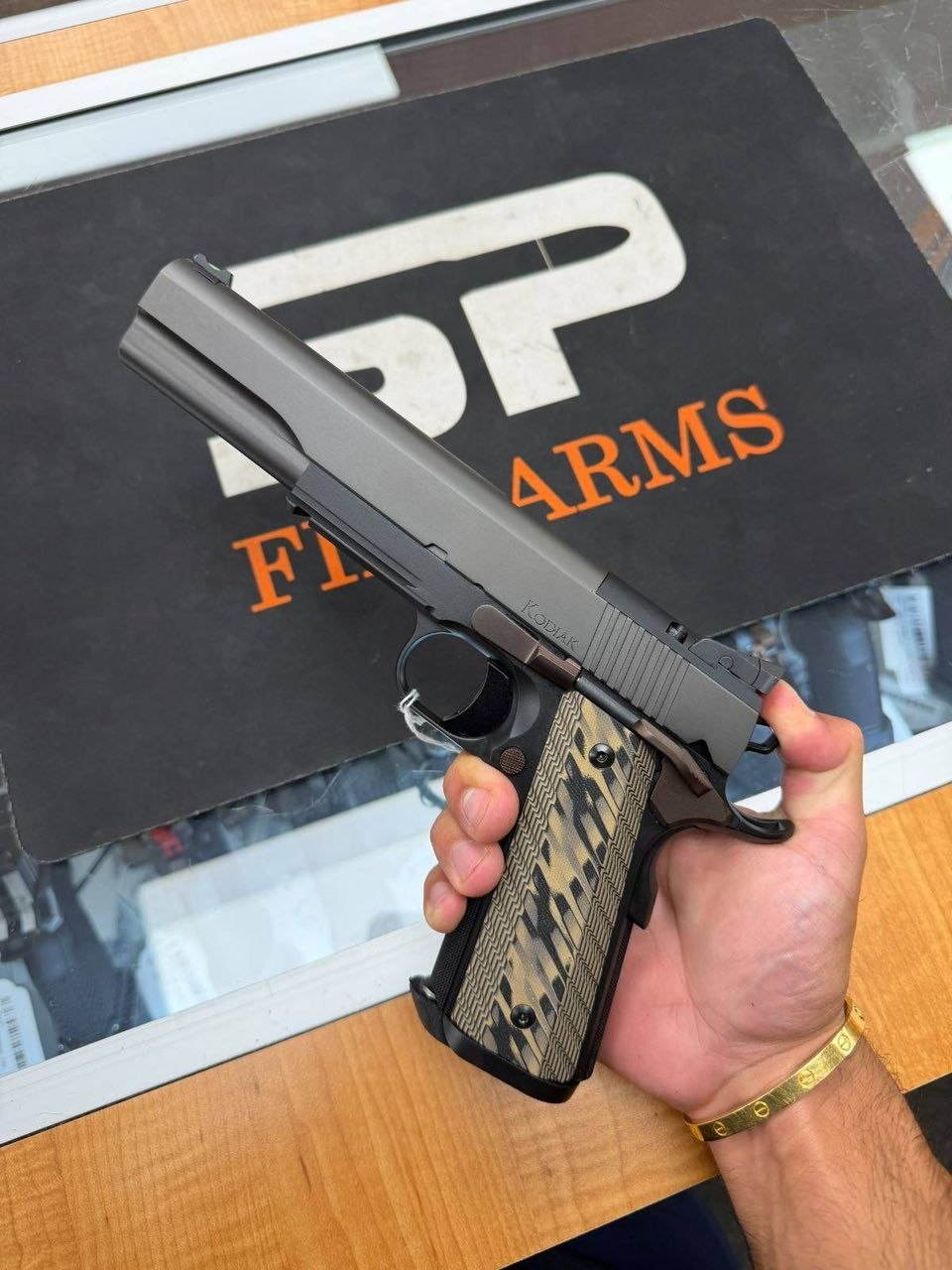
Dan Wesson Kodiak 10mm — Product Overview
The dan wesson kodiak 10mm is a large-format semi-automatic pistol associated with the Dan Wesson 1911 family. Chambered in 10mm Auto, the Kodiak is distinguished by its substantial configuration, long barrel, and stainless-steel construction. It represents a particular interpretation of the 1911 platform, combining the traditional operating design with the characteristics of the 10mm cartridge.
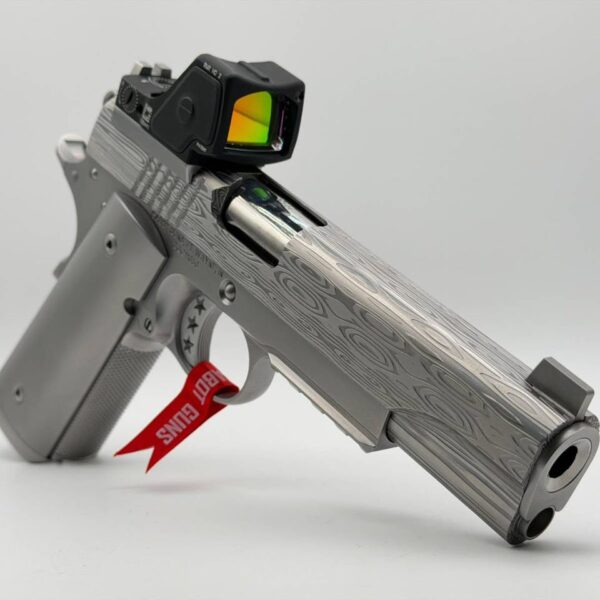
For identification and documentation purposes, the Kodiak is notable because it differs visually and dimensionally from compact and standard-length 1911 configurations. Its extended barrel and full-size construction give it a distinctive profile, while its stainless-steel finish contributes to its recognizable appearance.
Exact specifications can vary by production period and configuration. Therefore, the manufacturer’s documentation and markings on an individual firearm should be treated as the final authority.
Dan Wesson Background
Dan Wesson firearms have a long association with precision-oriented handgun manufacturing. The company became particularly recognized for revolvers before expanding its product range and developing 1911-style semi-automatic pistols.
The Dan Wesson 1911 family has included various configurations, finishes, chamberings, and barrel lengths. Within that broader family, the Kodiak occupies a distinctive position because of its 10mm chambering and extended configuration.
This history is useful when identifying the firearm because the Dan Wesson name has appeared across multiple generations and product lines. Consequently, model markings and production documentation are important when determining the exact specifications of an individual example.
10mm Auto Chambering
The Kodiak is chambered for 10mm Auto, a cartridge originally developed for semi-automatic pistols and subsequently adopted for a range of sporting, hunting, and defensive applications.
The 10mm cartridge is larger and generally more powerful than the 9mm cartridges commonly encountered in modern compact pistols. Its characteristics have contributed to its continued use in full-size handgun platforms.
However, cartridge performance varies according to ammunition, barrel length, firearm configuration, and other factors. Therefore, a product description should avoid assigning a single performance figure to every 10mm firearm or ammunition load.
The chambering marked on the individual firearm and the manufacturer’s instructions should always be used when determining ammunition compatibility.
Extended Barrel Configuration
One of the most recognizable characteristics of the Kodiak is its extended barrel configuration. Compared with a conventional Government-length 1911, the longer configuration gives the firearm a noticeably different visual profile.
The extended barrel also contributes to the overall length and balance of the firearm. However, the exact dimensions should be confirmed from the specifications for the particular production version.
From an identification perspective, barrel length is an especially useful characteristic because it helps distinguish the Kodiak from shorter Dan Wesson 1911 models.
Stainless-Steel Construction
The Kodiak is associated with a stainless-steel construction and a metallic finish that gives the firearm its distinctive appearance.
Stainless steel is commonly used in firearm manufacturing because of its combination of strength and corrosion resistance. Nevertheless, the specific alloy, treatment, and finish of individual components should be confirmed through manufacturer documentation.
The visible stainless appearance also makes machining details and surface contours relatively prominent. This contributes to the model’s recognizable aesthetic without requiring decorative elements.
1911 Platform
The Kodiak is based on the classic 1911 operating design. The 1911 platform has a long history in American firearm development and has been produced by numerous manufacturers in different configurations.
Dan Wesson’s interpretation retains the recognizable general form of the platform while adapting it for the 10mm chambering and the Kodiak’s larger configuration.
The result is a pistol that can be identified through familiar 1911 characteristics while also having several features specific to the Kodiak configuration.
Frame and Slide
The frame and slide form the primary structural components of the pistol. Their dimensions and relationship contribute to the Kodiak’s substantial appearance.
A technical description should distinguish between the basic 1911 architecture and features specific to the Kodiak. The exact machining, serrations, controls, and finish should be verified for the specific production version.
This is particularly important when documenting older examples, since production specifications can change over time.
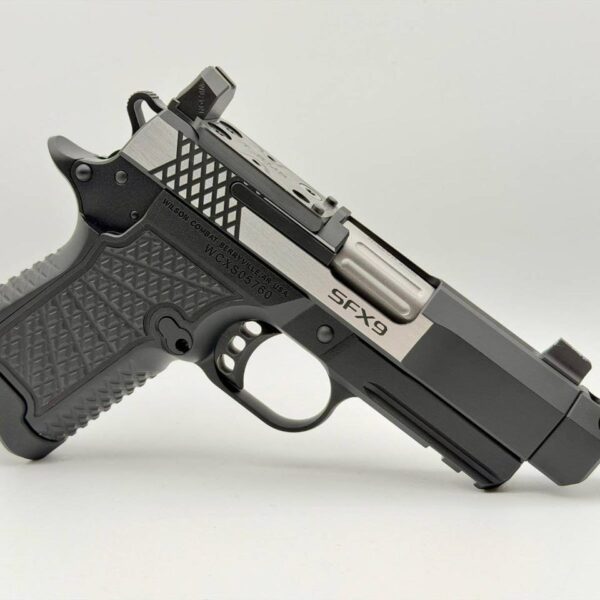
dan wesson kodiak 10mm
Sights
The Kodiak’s sighting system forms another part of its overall configuration. Factory sight specifications can vary depending on production version, so exact details should be confirmed from the relevant documentation.
When documenting an individual firearm, it is also important to determine whether the sights are original. A firearm may have been modified after leaving the factory, and photographs alone cannot always establish whether a component was factory-installed.
Controls
As a 1911-pattern pistol, the Kodiak incorporates the familiar arrangement of controls associated with that platform. These characteristics contribute to its recognizable appearance and distinguish it from many other semi-automatic handgun designs.
Specific control configurations, however, should be verified against the manufacturer’s specifications. Customization and production changes can result in differences between individual examples.
dan wesson kodiak 10mm dan wesson kodiak 10mm dan wesson kodiak 10mm dan wesson kodiak 10mm dan wesson kodiak 10mm dan wesson kodiak 10mm dan wesson kodiak 10mm dan wesson kodiak 10mm dan wesson kodiak 10mm dan wesson kodiak 10mm dan wesson kodiak 10mm dan wesson kodiak 10mm dan wesson kodiak 10mm dan wesson kodiak 10mm dan wesson kodiak 10mm dan wesson kodiak 10mm dan wesson kodiak 10mm dan wesson kodiak 10mm dan wesson kodiak 10mm dan wesson kodiak 10mm.
Grip Configuration
The grip area is another important part of the overall 1911 design. Grip panels, texture, and material can affect the visual character of an individual firearm.
Because grip panels can be replaced relatively easily, their presence on a particular example does not necessarily establish the original factory configuration. For historical or collector documentation, original photographs and manufacturer records provide stronger evidence.
Design and Balance
The Kodiak’s extended configuration gives it a distinctive physical presence compared with shorter 1911 pistols.
Its longer dimensions influence how the firearm is carried, handled, and stored. Those characteristics are important when documenting the product, although individual impressions of balance and handling can vary considerably.
A neutral description therefore focuses on measurable characteristics rather than presenting subjective handling preferences as universal conclusions.
Production Variations
Dan Wesson firearms have been produced across different periods, and specifications can vary between production runs.
Consequently, the term “Kodiak 10mm” may not by itself establish every detail of an individual firearm. Finish, sights, grips, markings, and other components should be verified separately.
This is particularly important for used or collectible examples, where modifications may have occurred during the firearm’s ownership history.
Identification Characteristics
Several features can assist in identifying a Dan Wesson Kodiak 10mm:
-
Dan Wesson manufacturer markings
-
Kodiak model designation
-
10mm chambering marking
-
Extended barrel configuration
-
Stainless-steel appearance
-
1911-style frame and slide
-
Factory or documented sight configuration
-
Original grip configuration, where applicable
These characteristics should be considered together rather than individually. For example, a long-barreled 1911 is not necessarily a Kodiak, and a stainless 10mm 1911 does not automatically establish a particular Dan Wesson model.
Importance of Original Documentation
Original documentation can provide valuable information about a particular Kodiak. Manuals, factory records, purchase documents, and photographs can help establish the firearm’s original configuration.
This information is especially useful when an example has been modified. An aftermarket optic, replacement grips, different sights, or refinishing may change the firearm’s current appearance without changing its original model identity.
Collectors and researchers should therefore distinguish between factory characteristics and later modifications.
Technical Description Versus Performance Claims
A reliable product description should distinguish between specifications and performance claims.
For example, the 10mm chambering and extended barrel are characteristics that can be documented. By contrast, claims about accuracy, recoil, velocity, or terminal performance require specific testing conditions and ammunition information.
This distinction is important because ammunition performance can vary substantially. A single generalized number may not accurately represent every load or configuration.
Accordingly, technical writing should use manufacturer-published specifications when available and avoid presenting unsupported performance claims as facts.
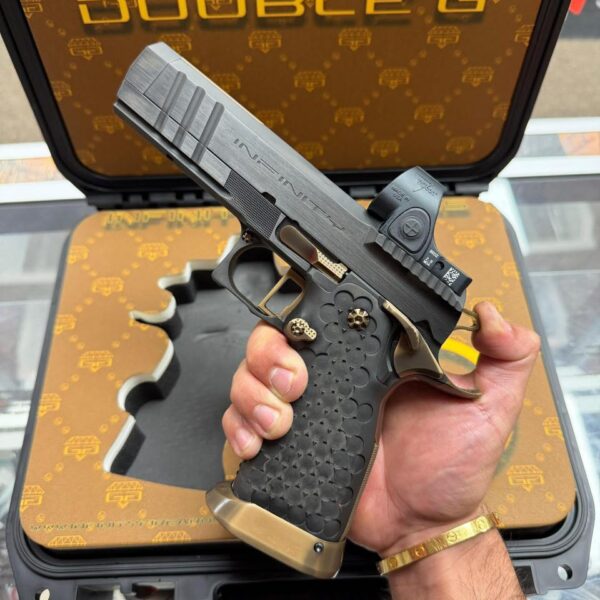
dan wesson kodiak 10mm
Maintenance and Documentation
Maintenance information should be obtained from the manufacturer’s instructions applicable to the specific Dan Wesson model.
The stainless-steel construction does not eliminate the need for appropriate maintenance. Firearms contain moving components and surfaces that require care according to manufacturer guidance.
Owners should follow the official manual for inspection, cleaning, lubrication, storage, and other maintenance procedures rather than relying on a generic description.
Safe Handling
The Dan Wesson Kodiak is a firearm and should be treated accordingly. It should always be considered loaded until its condition has been personally verified.
The muzzle should be kept pointed in a safe direction, and the trigger should not be touched unnecessarily. Firearms should be stored securely and kept inaccessible to unauthorized persons.
Manufacturer safety instructions should be followed, and qualified professional instruction should be sought where practical training is needed.
Applicable laws concerning possession, transportation, storage, and use vary by jurisdiction and should be followed.
Historical and Collecting Interest
The Kodiak can be of interest to collectors and researchers because it represents a distinctive combination of the 1911 platform, 10mm chambering, extended barrel configuration, and Dan Wesson manufacturing.
Its identification value comes from the combination of these characteristics rather than from any single feature.
For collectors, original condition, documentation, production history, and provenance can all be relevant. However, rarity and monetary value should not be assumed without reliable production and market information.
Final Overview
The Dan Wesson Kodiak 10mm is a distinctive 1911-pattern semi-automatic pistol characterized by its 10mm Auto chambering, extended configuration, and stainless-steel appearance.
Its design places it within the long history of 1911-style pistols while giving it a recognizable identity of its own. The combination of the 10mm chambering and extended configuration makes it visually and technically distinct from many more conventional 1911 variants.
For accurate identification, the exact model markings, production documentation, chambering, barrel configuration, finish, and factory-installed components should be verified for the individual firearm.
This overview is intended for general informational and identification purposes. It does not replace the manufacturer’s documentation, professional firearms-safety instruction, or applicable laws and regulations.
Dan Wesson Kodiak 10mm — Expanded Product Overview
The Dan Wesson Kodiak 10mm is a distinctive member of the Dan Wesson 1911 family. Its defining characteristics include its 10mm Auto chambering, extended configuration, and stainless-steel appearance. Together, these features give the Kodiak a recognizable profile that differs from shorter and more conventional 1911 configurations.
For technical writers, collectors, researchers, and readers interested in firearm identification, the Kodiak provides an interesting example of how a traditional handgun platform can be configured around a different cartridge and a longer overall design.
Exact specifications can vary depending on production period and individual configuration. Therefore, manufacturer documentation and markings on the specific firearm should always take precedence over generalized descriptions.
The Kodiak Within the Dan Wesson 1911 Family
Dan Wesson has a long history of producing specialized firearms, and its 1911-style pistols have been offered in a variety of configurations. These have included different chamberings, barrel lengths, finishes, and component arrangements.
The Kodiak represents one of the more distinctive configurations because of its combination of 10mm chambering and extended barrel design. Rather than following the proportions of a conventional Government-size 1911, it has a noticeably longer profile.
This makes the Kodiak relatively easy to distinguish visually when compared with more compact Dan Wesson models. Nevertheless, model identification should still be based on official markings and documentation rather than appearance alone.
Understanding the 10mm Platform
The 10mm Auto cartridge has an interesting place in modern handgun history. It was developed for semi-automatic pistols and has remained relevant because of its characteristics and versatility.
The cartridge is larger than many commonly encountered service-pistol cartridges and can be loaded across a range of performance levels. This means that two 10mm loads can have noticeably different characteristics even though both carry the same basic cartridge designation.
For that reason, a firearm’s chambering should be treated as an identification specification rather than a complete description of its ammunition performance.
The manufacturer’s ammunition guidance should always be consulted for the specific firearm, and ammunition should be matched to the markings and instructions provided for that firearm.
Extended Configuration
The extended configuration is one of the most immediately recognizable characteristics of the Kodiak.
A longer barrel changes the overall proportions of a handgun and can also affect its total dimensions and balance. These characteristics distinguish the Kodiak from shorter-barreled 1911 variants.
However, exact barrel length and overall dimensions should be confirmed for the particular production version being documented. Product specifications can change between production periods, and photographs can sometimes create misleading impressions of scale.
For cataloging purposes, the barrel configuration is therefore best recorded using the manufacturer’s stated specification.
Stainless-Steel Appearance
The stainless-steel appearance contributes significantly to the Kodiak’s visual identity.
Metallic finishes can make machining lines and surface contours particularly visible. On a 1911 platform, this can emphasize the relationship between the frame, slide, barrel, and other external components.
Although the firearm is associated with stainless-steel construction, individual components can use different materials or treatments. Consequently, a complete materials list should be obtained from official documentation rather than inferred from photographs.
This distinction is useful when preparing professional product descriptions because it separates visible characteristics from technical specifications that require verification.
The 1911 Design
The Kodiak belongs to the broad family of 1911-pattern pistols. The 1911 is one of the most recognizable semi-automatic handgun designs in firearm history and has been manufactured by numerous companies in many configurations.
Dan Wesson’s interpretation retains the general visual and mechanical identity associated with the platform while incorporating the characteristics required for the Kodiak configuration.
This combination gives the model both historical familiarity and a distinct identity. Readers familiar with 1911 pistols can recognize its basic architecture while also noticing the longer configuration and 10mm chambering.
Frame and Slide Relationship
The frame and slide form the principal external assemblies of the pistol. Their dimensions, machining, and relationship contribute to the overall appearance of the Kodiak.
The extended configuration gives the slide and barrel assembly a proportion that is immediately distinguishable from shorter 1911 variants.
For a technical description, however, it is preferable to avoid assuming specific machining patterns or control configurations unless those features have been verified for the exact production version.
This is particularly important when photographs are being used as the primary source of information.
Sights and Sight Configuration
Sights are another component that can vary between firearm configurations. The factory-installed sight arrangement should therefore be verified using the manufacturer’s documentation for the particular model and production period.
An individual Kodiak may also have been modified after leaving the factory. Replacement sights can alter the appearance of the firearm without changing its fundamental model designation.
For this reason, a product description should distinguish between “factory configuration” and “current configuration” whenever the history of an individual firearm is known.
Grip Panels and Exterior Details
The grip panels contribute to both the appearance and identification of an individual 1911.
However, grip panels are components that can be replaced relatively easily. A photograph showing a particular grip therefore does not necessarily establish that it was installed at the factory.
For historical documentation, original purchase records, factory photographs, catalogs, and other reliable documentation can help establish the original configuration.
The same principle applies to other externally visible components that may be replaced during the firearm’s ownership.
Production History
The production history of a firearm can influence its exact specifications. Manufacturers may change components, finishes, sights, markings, or other details over time.
As a result, a generalized description of the Kodiak should not be interpreted as a complete specification for every firearm bearing that name.
When identifying a particular example, the production date or serial-number range, when legitimately available, can help researchers determine which specifications applied during its production period.
Sensitive identifying information should not be unnecessarily published in public listings or documentation.
Collector and Research Considerations
The Kodiak’s unusual combination of characteristics can make it an interesting subject for collectors and researchers.
The 10mm chambering places it within a particular segment of the 1911 market, while its extended configuration gives it a distinctive visual profile.
Collectors may also consider whether a firearm retains its original finish, sights, grips, and other components. Documentation can be especially valuable because it provides evidence of the firearm’s original configuration.
However, collectible status and monetary value are separate questions. Neither rarity nor value should be assumed solely from appearance or model name. Reliable production information and current market evidence are necessary for those assessments.
Factory Originality
Factory originality is an important concept when documenting older firearms.
An example may retain its original major components while having smaller parts replaced. Alternatively, it may have undergone more extensive customization.
A careful record should therefore distinguish between:
-
Original factory components
-
Documented factory options
-
Later replacement components
-
Aftermarket modifications
-
Unknown or unverified changes
This structure helps prevent assumptions from becoming part of the permanent description.
Product Photography
Photographs can provide valuable visual information about the Kodiak. A complete photographic record can show the overall configuration, markings, finish, barrel profile, controls, sights, and grips.
Nevertheless, photographs have limitations. They cannot reliably establish internal dimensions, materials, tolerances, or the original factory status of every component.
For that reason, photographs should complement rather than replace official documentation.
When publishing photographs, sensitive identifying information should also be handled responsibly.
Technical Writing Considerations
A strong product description should separate objective specifications from interpretation.
Objective information includes the manufacturer, model designation, chambering, barrel configuration, finish, and documented components.
Interpretive statements include observations about visual character, historical significance, or design philosophy.
Keeping these categories separate makes the description more useful and reduces the possibility of presenting an opinion as a specification.
Performance claims require an additional level of caution. Accuracy, velocity, recoil, and similar characteristics can vary depending on ammunition, environmental conditions, firearm condition, and testing methods.
Maintenance and Manufacturer Instructions
Maintenance procedures should be obtained from the official instructions applicable to the specific Kodiak configuration.
A stainless-steel finish does not eliminate the need for proper care. Firearms contain moving components and surfaces that should be maintained according to the manufacturer’s recommendations.
The owner’s manual should be treated as the primary reference for inspection, cleaning, lubrication, storage, and other maintenance requirements.
If a firearm’s mechanical condition is uncertain, qualified professional assistance should be obtained rather than relying on a general online description.
Safe Storage
Responsible firearm ownership includes secure storage.
The Kodiak should be stored in a manner that prevents unauthorized access and is consistent with applicable law. Storage arrangements can vary according to local regulations and household circumstances.
Transportation requirements can also differ by jurisdiction. Consequently, owners should consult the laws applicable to their location rather than relying on generalized information.
Legal Considerations
Firearm laws vary considerably between jurisdictions. Requirements can concern ownership, registration, transportation, storage, transfers, and other aspects of possession.
A product description cannot establish whether a particular firearm is lawful to own or possess in a particular location.
Readers should consult current local laws and, where necessary, qualified legal or regulatory authorities.
dan wesson kodiak 10mm dan wesson kodiak 10mm dan wesson kodiak 10mm dan wesson kodiak 10mm dan wesson kodiak 10mm dan wesson kodiak 10mm dan wesson kodiak 10mm dan wesson kodiak 10mm dan wesson kodiak 10mm dan wesson kodiak 10mm dan wesson kodiak 10mm dan wesson kodiak 10mm dan wesson kodiak 10mm dan wesson kodiak 10mm dan wesson kodiak 10mm dan wesson kodiak 10mm dan wesson kodiak 10mm dan wesson kodiak 10mm dan wesson kodiak 10mm dan wesson kodiak 10mm.
Identification Summary
For readers attempting to identify a Dan Wesson Kodiak 10mm, the most useful characteristics to examine together are the manufacturer markings, model designation, 10mm chambering, extended barrel configuration, stainless-steel appearance, and 1911-style architecture.
Additional details such as sights, grips, controls, and finish specifications can help refine the identification.
However, none of these characteristics should be considered conclusive in isolation. A long-barreled 1911 may belong to another manufacturer, and a stainless 10mm 1911 does not automatically establish the Kodiak model.
Official documentation provides the strongest basis for final identification.
Overall Technical Character
From a technical perspective, the Kodiak is notable because it combines a well-established handgun platform with a cartridge that has different characteristics from the more common chamberings found in many 1911 pistols.
Its extended configuration also gives it a distinct physical profile.
This combination makes the Kodiak a useful example of the variety that can exist within the 1911 platform. It demonstrates how changes in chambering, barrel configuration, and construction can create a substantially different model while retaining the recognizable architecture of the underlying design.
dan wesson kodiak 10mm
Final Perspective
The Dan Wesson Kodiak 10mm is a distinctive 1911-pattern pistol characterized by its 10mm Auto chambering, extended configuration, and stainless-steel appearance.
Its combination of traditional 1911 architecture and a specialized configuration makes it an interesting subject for technical documentation, historical research, and model identification.
The most reliable way to document an individual Kodiak is to combine its official markings with manufacturer specifications and, where available, original documentation. Current appearance should be distinguished from confirmed factory configuration because firearms can be modified during their ownership history.
Similarly, specifications should be separated from performance claims. The 10mm chambering, barrel configuration, and construction are identifying characteristics, whereas claims about accuracy, recoil, velocity, or other performance require appropriate supporting evidence.
Ultimately, the Kodiak is best understood as a specific configuration within the broader Dan Wesson 1911 family rather than through any single characteristic. Its chambering, dimensions, construction, and design features work together to establish its identity.
This overview is intended solely for general informational, technical, and identification purposes. It does not replace the manufacturer’s documentation, professional firearms-safety instruction, or applicable laws and regulations.
Reviews
There are no reviews yet.