
Daniel Defense DD PCC 9mm SBR – Product Description and Technical Overview
Introduction to the Daniel Defense DD PCC 9mm SBR
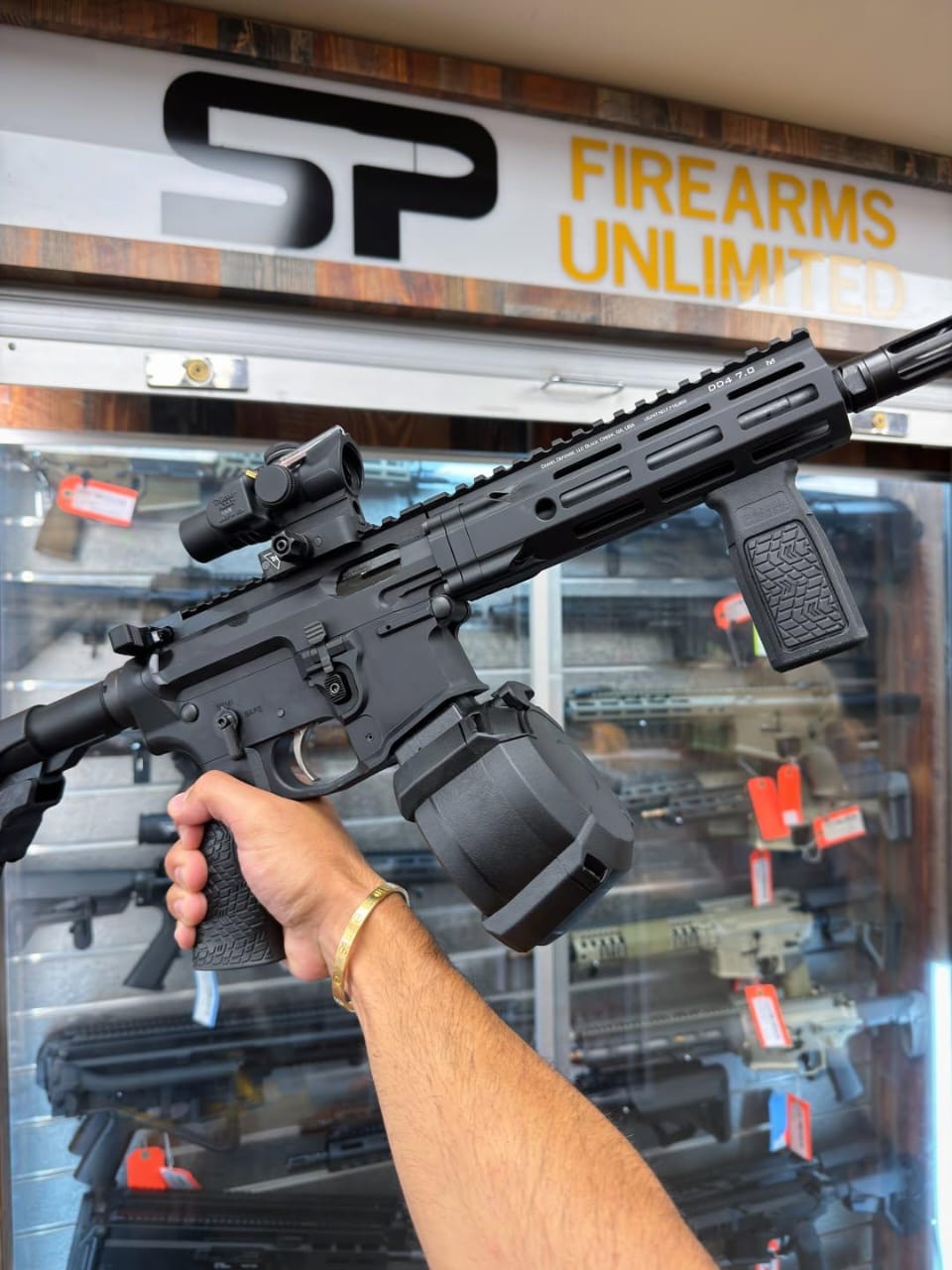
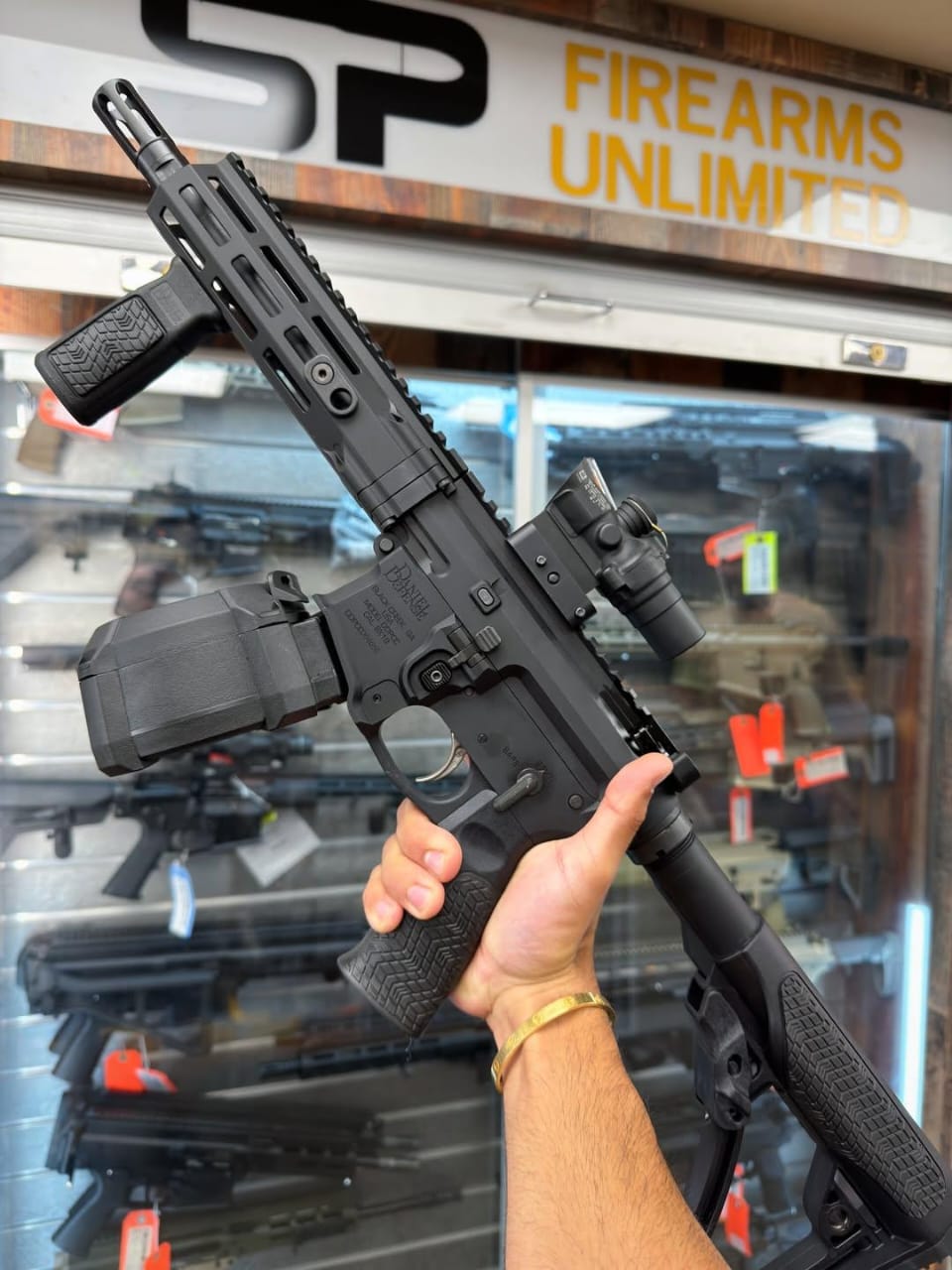
The daniel defense dd pcc 9mm sbr is a compact pistol-caliber carbine developed by Daniel Defense. Chambered in 9×19mm Parabellum, this firearm belongs to the pistol-caliber carbine (PCC) category, which combines a shoulder-fired firearm configuration with a pistol cartridge. Its design draws on the familiar AR-style platform while incorporating components developed specifically for its 9mm chambering.
The DD PCC SBR represents a distinct category within the company’s firearm lineup. Rather than using a traditional rifle cartridge, it is chambered for 9mm ammunition. Consequently, its operating system, magazine compatibility, and overall configuration reflect the requirements of a pistol-caliber platform.
Furthermore, the short-barreled rifle configuration distinguishes this model from conventional full-length carbines. Its compact dimensions form part of its physical identity, while its construction incorporates a dedicated receiver system and manufacturer-specific components.
The DD PCC 9mm SBR is therefore best understood through its principal characteristics: its caliber, compact configuration, AR-style design, component compatibility, manufacturing characteristics, and regulatory classification.
Product Identification and Classification
The Daniel Defense DD PCC is a semiautomatic pistol-caliber carbine. The SBR designation refers to its short-barreled rifle configuration. In this particular model, the firearm is chambered in 9×19mm, a widely recognized pistol cartridge.
Pistol-caliber carbines occupy a separate category from conventional centerfire rifles. Although both categories include shoulder-fired firearms, they differ in ammunition specifications and certain mechanical characteristics.
For example, the DD PCC uses 9mm ammunition rather than the intermediate rifle cartridges commonly associated with AR-pattern rifles. This distinction is important when reviewing product specifications, ammunition compatibility, and the manufacturer’s documentation.
Additionally, the SBR classification should not be confused with a general description of firearm dimensions. It is a legal classification whose definition depends on the applicable jurisdiction. In the United States, short-barreled rifles are subject to federal and potentially state-level requirements.
Therefore, prospective owners and professional evaluators should verify the applicable regulations before acquiring, possessing, transferring, or transporting this firearm.
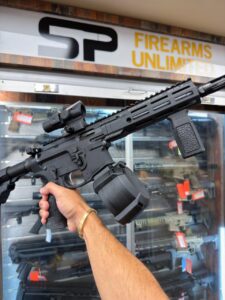
daniel defense dd pcc 9mm sbr
Caliber and Ammunition Classification
The DD PCC SBR is chambered in 9×19mm Parabellum, commonly called 9mm Luger. This cartridge is widely used in handguns and pistol-caliber carbines.
The 9×19mm designation identifies the cartridge dimensions and distinguishes it from other ammunition types. Although several cartridges share similar names or approximate dimensions, they are not automatically interchangeable.
Consequently, ammunition identification remains an important part of firearm ownership. Users should refer to the manufacturer’s instructions and the markings on the firearm when confirming the appropriate ammunition specification.
Moreover, ammunition selection should account for the manufacturer’s published recommendations. Damaged, improperly stored, or incorrectly identified cartridges should never be used.
The caliber specification also provides an important distinction between the DD PCC and other Daniel Defense products chambered in rifle cartridges.
Barrel and External Dimensions
Published specifications for the DD PCC SBR identify an approximately 8.3-inch barrel, equivalent to approximately 21.1 centimeters. The shortened barrel contributes to the model’s classification and overall physical dimensions.
The barrel is described in published product information as cold hammer forged. This manufacturing designation refers to a barrel-production process in which specialized tooling forms the rifling through mechanical deformation.
Cold hammer forging is an established manufacturing technique in the firearms industry. However, the presence of this manufacturing feature should not be interpreted as a guarantee of a particular accuracy level or service life.
The published specifications also identify an approximate overall length range of 57 to 68.5 centimeters, depending on the configuration of the adjustable stock.
Likewise, the listed weight is approximately 2.76 kilograms. Actual measurements may vary with accessories, configuration, and production specifications.
These figures should be checked against the manufacturer’s current documentation before being used in a technical catalog or procurement record.
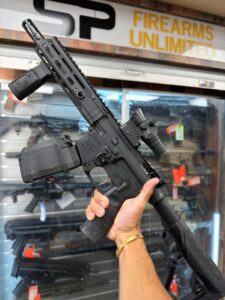
daniel defense dd pcc 9mm sbr
Receiver Construction and Platform Design
The DD PCC uses a dedicated upper and lower receiver arrangement based on the general appearance and control layout of the AR platform.
However, visual similarity does not mean that every component is interchangeable with a conventional AR-15. The PCC incorporates a purpose-designed receiver configuration and manufacturer-specific components.
This distinction is particularly relevant when reviewing replacement parts, accessories, and compatibility information.
The receiver assembly forms the central structural portion of the firearm. It houses the relevant mechanical components and provides the mounting points associated with the overall platform.
The manufacturer also identifies ambidextrous characteristics in the receiver and control arrangement. Ambidextrous controls are intended to provide access from either side, although individual features and their operation should always be confirmed through the official product documentation.
In addition, the receiver construction should be evaluated according to the manufacturer’s published material specifications and maintenance guidance rather than assumptions based on the appearance of other AR-pattern firearms.
Magazine Compatibility
Magazine compatibility is another identifying characteristic of the DD PCC 9mm platform.
Published product information identifies compatibility with the CZ Scorpion magazine pattern. This is an important distinction because pistol-caliber carbines use different magazine arrangements depending on their manufacturers and platform designs.
Not all 9mm magazines share the same dimensions, locking interfaces, or compatibility characteristics. Therefore, the fact that two firearms use the same cartridge does not establish that their magazines can be exchanged.
For this reason, magazine selection should follow the manufacturer’s approved compatibility information.
The magazine specification also provides a useful distinction when comparing the DD PCC with other pistol-caliber carbines that use different magazine families.
Handguard and External Accessory Interface
The DD PCC product information identifies a Daniel Defense MFR-style handguard with an M-LOK accessory interface.
M-LOK is a modular attachment standard used across various firearm platforms. It provides an established interface for compatible accessories and external equipment.
The presence of this interface is relevant to product identification and accessory compatibility. Nevertheless, the use of a common attachment standard does not mean that every accessory is automatically appropriate for every firearm configuration.
daniel defense dd pcc 9mm sbr
daniel defense dd pcc 9mm sbr daniel defense dd pcc 9mm sbr daniel defense dd pcc 9mm sbr daniel defense dd pcc 9mm sbr daniel defense dd pcc 9mm sbr daniel defense dd pcc 9mm sbr daniel defense dd pcc 9mm sbr daniel defense dd pcc 9mm sbr daniel defense dd pcc 9mm sbr daniel defense dd pcc 9mm sbr daniel defense dd pcc 9mm sbr daniel defense dd pcc 9mm sbr daniel defense dd pcc 9mm sbr
Accessory dimensions, mounting requirements, manufacturer recommendations, and applicable regulations should be considered before any installation.
The handguard also forms part of the firearm’s external construction. Its material, finish, dimensions, and mounting characteristics should be verified against the documentation supplied with the specific product.
Operating-System Classification
The Daniel Defense DD PCC uses a semiautomatic operating system with a blowback action, as identified in the manufacturer’s owner’s manual.
This classification distinguishes it from manually operated firearms and from firearm platforms that employ different operating-system arrangements.
A semiautomatic firearm is designed to discharge one round for each individual trigger activation. The firearm’s mechanical system handles the subsequent cycling process according to its intended design.
This is a general classification rather than a substitute for the manufacturer’s operating instructions.
For accurate product documentation, the operating-system description should remain consistent with the official owner’s manual. Furthermore, users should consult that manual for all handling, inspection, cleaning, and maintenance requirements.
Buffer-System Specification
The DD PCC product information identifies a hydraulic buffer system as part of its design.
A buffer assembly is a component associated with the firearm’s operating-system architecture. Its specification is relevant to identifying the platform and distinguishing it from other pistol-caliber carbines.
The use of a hydraulic buffer is one of the documented characteristics of this model.
However, component specifications should not be interpreted as universal compatibility information. Replacement components, modifications, and third-party products require specific manufacturer approval.
For this reason, the original technical documentation remains the appropriate reference for determining which parts are authorized for the particular model.
Manufacturing and Finish Characteristics
Daniel Defense is an American firearms manufacturer known for producing rifles, carbines, and related firearm components.
The DD PCC belongs to the company’s pistol-caliber carbine product category. Its manufacturing description should be considered in relation to the materials, production methods, finishing processes, and quality-control information published by the manufacturer.
External finishes serve several purposes in firearm manufacturing. They contribute to the product’s appearance and provide a surface treatment appropriate to the specified materials.
Nevertheless, a product description should distinguish between documented manufacturing characteristics and general assumptions about performance.
The exact finish, material composition, and production specifications should be confirmed through the applicable product documentation.
Likewise, individual product variations may exist between production batches or market-specific configurations.
Dimensions and Weight Specifications
The published specifications associated with the DD PCC SBR provide a useful reference for technical identification.
| Specification | Published information |
|---|---|
| Manufacturer | Daniel Defense |
| Model | DD PCC SBR |
| Firearm category | Pistol-caliber carbine |
| Caliber | 9×19mm |
| Operating system | Semiautomatic blowback |
| Barrel length | Approximately 8.3 inches |
| Barrel construction | Cold hammer forged |
| Overall length | Approximately 57–68.5 cm |
| Listed weight | Approximately 2.76 kg |
| Magazine pattern | CZ Scorpion compatible |
| Handguard interface | M-LOK |
| Buffer specification | Hydraulic buffer |
| Thread specification | 1/2×28, as listed for the referenced configuration |
These figures are published reference specifications rather than a guarantee that every regional version has identical dimensions.
Consequently, buyers, distributors, and catalog administrators should confirm the exact SKU and production configuration before publishing final specifications.
Product Identification and Model Variations
The DD PCC should be distinguished from other firearms within the Daniel Defense catalog.
Although several models share visual characteristics associated with the AR platform, they may differ significantly in caliber, receiver construction, barrel dimensions, magazine compatibility, and operating-system specifications.
For example, a conventional rifle-caliber AR-pattern firearm should not be described as mechanically identical to the DD PCC simply because the external layouts appear similar.
Similarly, the DD PCC should not be confused with a pistol configuration or a full-length rifle configuration.
The SBR designation identifies a particular configuration and may carry additional legal implications depending on the country or state in which the firearm is possessed.
Accurate model identification is therefore essential for inventory management, technical documentation, warranty administration, and regulatory compliance.
Safety and Responsible Ownership
Firearm safety is an essential consideration in any technical description of the DD PCC 9mm SBR.
All firearms should be treated as loaded until their condition has been positively established through the procedures specified by the manufacturer.
Users should maintain a safe direction, keep their fingers away from the trigger unless they are following the appropriate firing procedures at an authorized range, and remain aware of the surrounding environment.
Furthermore, firearms should be stored securely and separately from unauthorized access.
A suitable storage arrangement should prevent access by children, untrained individuals, and anyone who is not legally authorized to possess the firearm.
The manufacturer’s owner’s manual should be consulted before handling, inspecting, transporting, or maintaining the DD PCC.
In addition, any maintenance or inspection beyond ordinary user-level procedures should be referred to a qualified firearms professional.
Damaged or malfunctioning firearms should not be used until they have received appropriate professional attention.
Legal Classification and Regulatory Considerations
The SBR designation has specific legal significance in certain jurisdictions.
In the United States, the National Firearms Act establishes federal requirements concerning short-barreled rifles. Additional state and local restrictions may also apply.
Other countries use different firearm classification systems. Consequently, the American SBR terminology should not automatically be treated as the legal classification in another country.
Before acquiring or possessing the DD PCC, individuals should establish whether the particular configuration is permitted under local law.
Relevant considerations may include minimum barrel dimensions, overall firearm length, licensing, registration, import permissions, transfer procedures, and restrictions on particular firearm categories.
International buyers should also consider import and export regulations.
Furthermore, a firearm’s classification may change depending on its configuration and the laws governing that configuration.
For these reasons, the applicable government authority and qualified legal professionals should be consulted whenever the legal status is uncertain.
Documentation, Maintenance, and Product Support
Proper documentation contributes to responsible firearm ownership and accurate product identification.
The original owner’s manual contains important information about the firearm’s specifications, safety requirements, inspection procedures, and manufacturer-approved maintenance.
Owners should retain the original documentation, purchase records, and applicable warranty information.
Additionally, the firearm’s serial number should be handled according to the applicable registration and recordkeeping requirements. It should not be unnecessarily published in public product listings.
Maintenance should follow the procedures established by Daniel Defense. The use of unapproved replacement parts or unauthorized modifications may affect the manufacturer’s warranty and the firearm’s intended configuration.
If a component appears damaged, worn, or defective, the appropriate response is to seek qualified professional assessment.
A properly maintained documentation record also makes it easier to identify the exact model when communicating with the manufacturer or an authorized distributor.
Comparison with the General Pistol-Caliber Carbine Category
Pistol-caliber carbines represent a broad category of firearms that use handgun ammunition in a carbine-style configuration.
Within this category, manufacturers employ different receiver designs, magazine systems, operating mechanisms, and external accessory interfaces.
The DD PCC occupies the AR-style segment of this category. Its 9mm chambering and dedicated receiver architecture distinguish it from conventional rifle-caliber AR platforms.
Other pistol-caliber carbines may use different magazine patterns or operating systems. Therefore, comparisons should focus on verifiable specifications instead of assuming that products within the same category share identical construction.
The DD PCC’s documented characteristics include its 9×19mm chambering, dedicated receiver system, hydraulic buffer specification, and M-LOK handguard interface.
These characteristics provide an objective foundation for comparing the model with other products in the PCC category.
However, any direct comparison should account for differences in manufacturer specifications, production versions, and regional configurations.
Intended Documentation and Product-Catalog Use
The Daniel Defense DD PCC 9mm SBR can be documented in a technical catalog as a semiautomatic, 9×19mm pistol-caliber carbine in a short-barreled rifle configuration.
A complete product entry should identify the manufacturer, model designation, caliber, barrel specification, receiver configuration, magazine compatibility, and applicable legal classification.
Furthermore, the description should distinguish between confirmed factory specifications and optional or aftermarket components.
This distinction is important for distributors, technical writers, inventory managers, and professional evaluators.
Where the product is listed for international markets, the catalog should also explain that firearm classifications and import requirements vary by jurisdiction.
daniel defense dd pcc 9mm sbr daniel defense dd pcc 9mm sbr daniel defense dd pcc 9mm sbr daniel defense dd pcc 9mm sbr daniel defense dd pcc 9mm sbr daniel defense dd pcc 9mm sbr daniel defense dd pcc 9mm sbr daniel defense dd pcc 9mm sbr daniel defense dd pcc 9mm sbr daniel defense dd pcc 9mm sbr daniel defense dd pcc 9mm sbr daniel defense dd pcc 9mm sbr daniel defense dd pcc 9mm sbr daniel defense dd pcc 9mm sbr.
Product photographs, manufacturer documentation, and SKU information should correspond to the exact model being described.
Conclusion
The Daniel Defense DD PCC 9mm SBR is a semiautomatic pistol-caliber carbine chambered in 9×19mm Parabellum. Its design incorporates an AR-style receiver arrangement, a dedicated 9mm platform architecture, a CZ Scorpion magazine pattern, an M-LOK accessory interface, and a hydraulic buffer specification.
Its short-barreled rifle configuration is an important part of its product identity and regulatory classification.
Additionally, its published technical specifications provide a basis for identifying the model and distinguishing it from other firearms in the Daniel Defense catalog.
For accurate technical records, the manufacturer’s current documentation should remain the primary reference for specifications, compatibility, and maintenance requirements.
Ultimately, the DD PCC 9mm SBR should be evaluated as a specific firearm platform with its own documented construction, component specifications, and legal considerations. Responsible ownership requires compliance with applicable laws, secure storage, appropriate training, and adherence to the manufacturer’s safety instructions.

Reviews
There are no reviews yet.