
Walther PPS .40 S&W: Product Overview, Design, Specifications, and Safety
Introduction to the Walther PPS .40 S&W
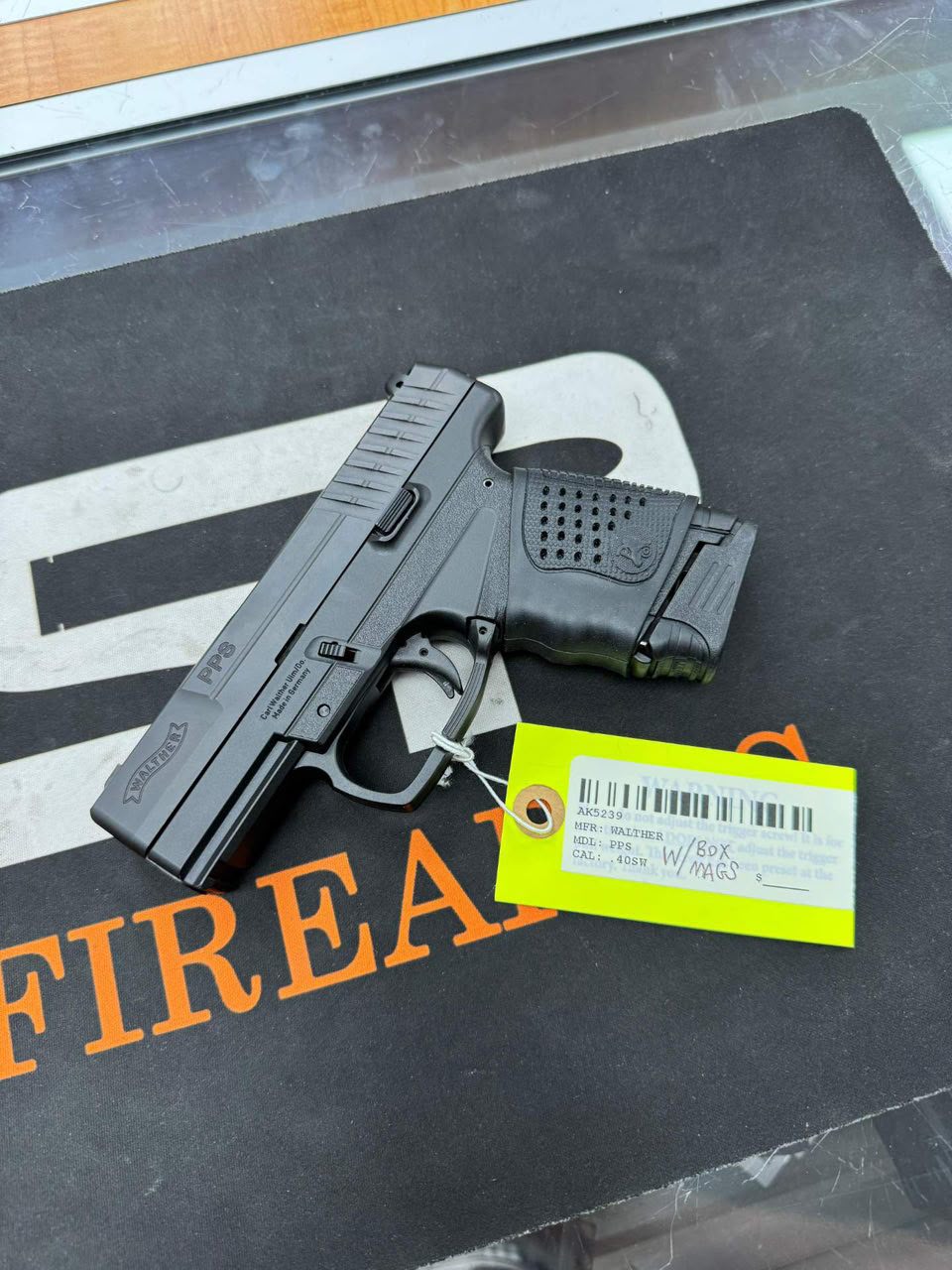
The walter pps .40 s&w chambered in .40 Smith & Wesson (.40 S&W) is a compact, semiautomatic handgun associated with the slim-profile pistol category. Developed by the German firearms manufacturer Walther, the PPS family was designed around a relatively narrow frame and a streamlined overall profile. As a result, the model occupies a distinct place in the broader history of compact handgun design.
The PPS name stands for Police Pistol Slim, reflecting the product family’s emphasis on a narrow configuration. Unlike larger service pistols, which typically accommodate wider frames and higher-capacity magazines, the PPS design prioritizes a more compact form. However, its particular dimensions, magazine capacity, and operating characteristics depend on the exact model and caliber.
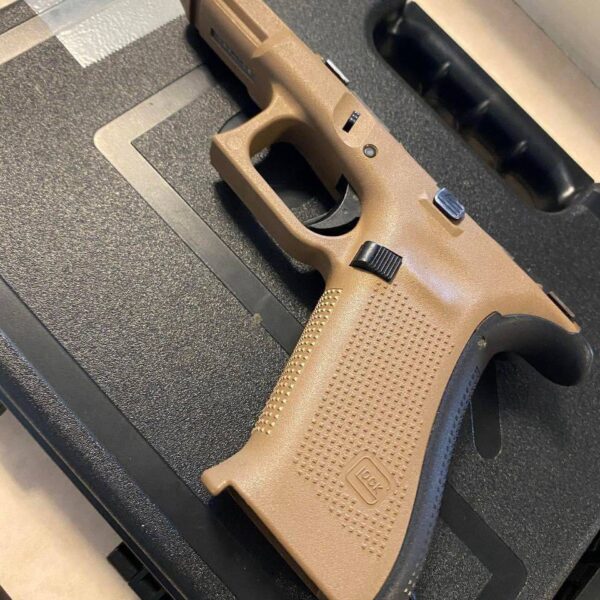
walter pps .40 s&w
Furthermore, the .40 S&W version represents one configuration within the PPS family. The cartridge was developed in the United States during the early 1990s and became widely associated with law-enforcement handguns. Its introduction influenced the development of numerous semiautomatic pistol platforms, including compact models intended for users who wanted a smaller handgun chambered for this cartridge.
A proper product description should distinguish verified specifications from general characteristics. Although pistols in the same product family may look similar, differences in production year, market, and configuration can affect their specifications. Therefore, a particular firearm should be identified by its exact model designation and manufacturer documentation before its technical details are published.
Manufacturer and Product Background
Walther has a long history in firearms engineering, with products spanning sporting pistols, service handguns, and compact semiautomatic designs. The company’s products have contributed to several important developments in modern handgun construction. Over time, its catalog has included designs intended for different applications, ranging from competitive shooting to professional use.
The PPS family reflects the broader industry trend toward narrower handguns. Traditionally, many service pistols were designed with relatively substantial grips and frames. These dimensions could provide a familiar grip profile, but they also increased the overall width of the firearm. Consequently, manufacturers explored slimmer designs that maintained the basic operating principles of semiautomatic pistols while reducing their external dimensions.
The original PPS entered the market as part of this development. Its narrow profile distinguished it from many conventional service pistols, while its semiautomatic operating system placed it within an established category of handgun technology.
Nevertheless, a product’s historical significance should not be confused with a guarantee of performance or suitability. Individual examples may differ in condition, maintenance history, and component wear. Likewise, a model’s reputation cannot replace an inspection by a qualified professional.
For catalog and reference purposes, the manufacturer’s identity, model name, chambering, and production variant provide a useful foundation for describing the product accurately.
Understanding the .40 Smith & Wesson Cartridge
The .40 Smith & Wesson cartridge, commonly abbreviated as .40 S&W, was introduced in 1990. It was developed to provide a handgun cartridge that combined characteristics associated with established service-pistol ammunition in a format suitable for semiautomatic handguns.
The cartridge subsequently became common in law-enforcement and civilian handgun markets. During the following decades, manufacturers produced numerous pistols chambered for it. However, its popularity varied across regions and institutions, and other cartridges remained important alternatives.
Cartridge design involves several interacting factors, including projectile mass, velocity, pressure, firearm dimensions, and the characteristics of the firearm’s operating system. Therefore, caliber alone does not provide a complete measure of a handgun’s performance.
Similarly, the dimensions of a cartridge do not establish whether a particular firearm is compatible with it. Firearms must use only the ammunition specified by their manufacturer. Ammunition that appears similar or shares some dimensions should never be assumed to be interchangeable.
For a Walther PPS marked for .40 S&W, the markings and the manufacturer’s documentation should be checked to establish the correct chambering. If the markings are unclear or the firearm’s configuration is uncertain, a qualified gunsmith should inspect it before use.
Additionally, ammunition should be stored in accordance with the manufacturer’s recommendations and applicable local requirements. Proper identification, storage, and handling are essential elements of responsible firearm ownership.
Compact Form and External Design
Compact handguns occupy a category between larger service pistols and smaller specialty designs. Their dimensions influence several aspects of ownership, including storage requirements, grip fit, overall weight, and ease of transportation in lawful contexts.
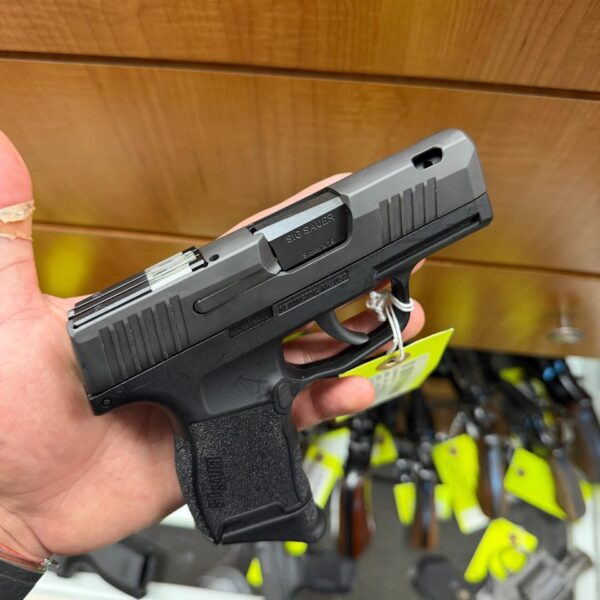
The Walther PPS family is recognized for its relatively slim external profile. This design characteristic distinguishes it from many wider-framed pistols. However, a narrow frame does not automatically mean that a firearm will fit every person’s hand comfortably.
Hand size, finger length, grip preference, and familiarity with a particular firearm all affect the experience of handling it. Furthermore, individual preferences can differ substantially, even among people with similar hand dimensions.
The external construction of a pistol also serves practical purposes. Its frame supports the operating components, while the slide houses or interacts with several elements of the firing and cycling systems. Controls, sights, and grip surfaces contribute to the firearm’s overall configuration.
walter pps .40 s&w walter pps .40 s&w walter pps .40 s&w walter pps .40 s&w walter pps .40 s&w walter pps .40 s&w walter pps .40 s&w walter pps .40 s&w walter pps .40 s&w walter pps .40 s&w walter pps .40 s&w walter pps .40 s&w walter pps .40 s&wwalter pps .40 s&w walter pps .40 s&w walter pps .40 s&w walter pps .40 s&w.
These components should be assessed according to the manufacturer’s specifications rather than visual appearance alone. For example, replacement parts or modifications may affect compatibility and safe operation. Accordingly, any proposed change should be evaluated by a qualified professional.
When documenting a particular PPS .40 S&W, a catalog entry should distinguish factory-standard features from aftermarket additions. This distinction improves the accuracy of the description and helps readers understand whether the listed characteristics apply to the original model or an individual example.
Semiautomatic Operating System
A semiautomatic pistol uses energy generated during firing to cycle its operating mechanism and prepare for a subsequent shot. In a conventional semiautomatic design, the mechanism extracts and ejects the fired cartridge case, then feeds another cartridge from the magazine when the operating cycle functions as intended.
Unlike a fully automatic firearm, a semiautomatic pistol is designed to fire one shot for each separate trigger pull. Its operating mechanism does not continue firing simply because the trigger remains depressed.
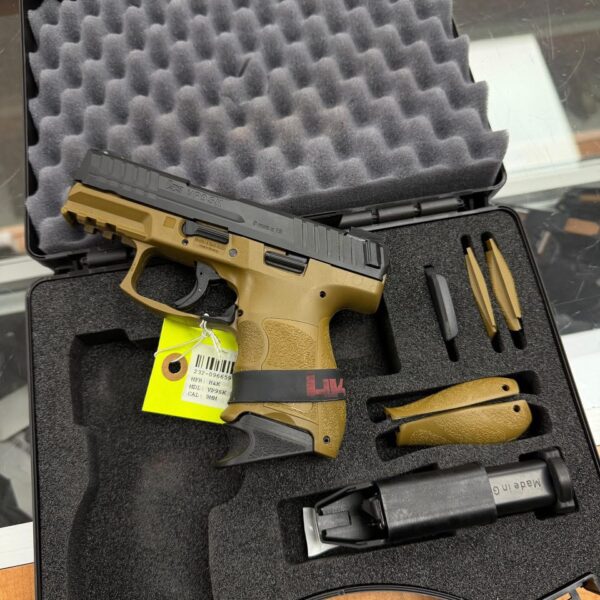
walter pps .40 s&w
The Walther PPS belongs to this general category of firearm. However, an explanation of the operating principle should not be interpreted as a substitute for formal safety training or the manufacturer’s instructions.
Mechanical condition plays an important role in safe operation. Worn parts, improper maintenance, incompatible ammunition, or unapproved modifications can affect reliability and safety. Therefore, the condition of an individual firearm should be evaluated independently of general information about the model.
Moreover, a firearm that appears externally clean may still require professional inspection. Internal wear and component condition cannot always be determined from appearance alone.
A responsible product reference should explain the broad operating category without implying that every example will perform identically. Manufacturing differences, age, maintenance, and previous use can all influence an individual firearm’s condition.
Grip Design and Ergonomic Considerations
Ergonomics refers to the relationship between a product’s design and the person using it. In handgun design, relevant considerations include grip dimensions, surface texture, control placement, sight visibility, and the relationship between the frame and the user’s hand.
A slim-profile handgun may appeal to some users because of its narrow frame. Nevertheless, comfort is subjective. A grip that feels natural to one person may feel too small or too large to another.
Grip fit should not be assessed by appearance alone. Instead, any evaluation should take place in a lawful, controlled setting under appropriate professional supervision, with the firearm confirmed to be unloaded and handled according to established safety procedures.
The condition of the grip surfaces also matters. Damage, deterioration, or unauthorized alterations may affect the product’s original characteristics. Consequently, a used example should be examined for visible damage and signs of modification.
Ergonomic features should be described factually rather than presented as universally beneficial. A neutral catalog entry can identify the general grip profile and external configuration while acknowledging that personal fit varies.
This approach also improves readability. Rather than relying on broad promotional claims, a product description can explain what a design feature is and why it may matter, while allowing readers to understand its limitations.
Sights, Controls, and External Components
A handgun’s external components serve distinct functions. Sights provide a visual reference, controls allow the user to interact with particular mechanisms, and the frame and slide support the firearm’s overall construction.
The exact configuration of these components may vary by production version or individual firearm. Consequently, a description of the Walther PPS .40 S&W should not assume that every example has identical sights, markings, or accessories.
For instance, replacement sights may have been installed during the firearm’s service life. Similarly, a previous owner may have replaced certain external components. Such changes should be documented where relevant, particularly in a resale listing or condition report.
The presence of a particular control should also be distinguished from an assumption about its operation. Manufacturer documentation provides the appropriate reference for identifying controls and understanding their intended functions.
Furthermore, components should be evaluated for visible damage, unusual movement, corrosion, or evidence of improper alteration. If a component appears damaged or its function is uncertain, the firearm should be referred to a qualified gunsmith.
A clear description of external components helps readers identify the product without overstating its capabilities. It also separates general design information from the condition of the individual item being documented.
Magazine and Configuration Information
A magazine stores cartridges and supplies them to the firearm’s feeding mechanism. Magazine design is an important aspect of semiautomatic handgun construction because the magazine must be compatible with the firearm’s specific model and chambering.
Magazine capacity is not a universal characteristic of the entire PPS family. It can vary according to the model, caliber, magazine design, and applicable market requirements. For that reason, a capacity figure should only be published after the exact configuration has been verified.
Likewise, the physical compatibility of magazines should never be assumed merely because two firearms share a manufacturer or product-family name. Different models may require different components.
A catalog description should identify the magazines included with the individual firearm, if known, and distinguish included accessories from standard factory equipment. If the magazine’s identity or compatibility cannot be confirmed, the listing should state that the information remains unverified.
Local laws may also restrict magazine capacity or possession. As a result, the legal requirements applicable to the intended jurisdiction should be checked independently of the manufacturer’s technical specifications.
These distinctions are particularly important for used products. An individual firearm may be offered with original magazines, replacement magazines, or no magazine at all. Recording what is actually present makes the description more accurate and reduces uncertainty for prospective readers.
Materials, Finish, and General Construction
A firearm’s materials and finish contribute to its physical characteristics, appearance, and resistance to environmental exposure. However, material specifications should be verified for the exact product rather than inferred from a photograph or a general description of the brand.
The Walther PPS has a compact semiautomatic design, but the materials and finish of a particular example should be documented with reference to the appropriate model information and direct inspection.
External wear may develop through ordinary handling, storage, and use. Scratches, finish loss, discoloration, and surface corrosion can affect the appearance of a used firearm. Nevertheless, cosmetic condition alone does not establish the condition of internal components.
Conversely, an attractive exterior does not guarantee that a firearm is mechanically sound. An assessment of mechanical condition requires appropriate expertise and, when necessary, a professional inspection.
A useful condition report should distinguish between cosmetic observations and verified mechanical findings. It should also disclose known modifications, replacement components, and relevant maintenance history.
In addition, photographs should represent the actual item being described. Images of another model or a different production variant may mislead readers, especially when small external differences are difficult to identify.
Accurate documentation therefore benefits both the seller and the reader. It provides a clearer picture of the individual firearm without relying on unsupported claims about durability, performance, or condition.
Maintenance and Condition Assessment
Routine maintenance is an important part of responsible firearm ownership. The correct procedures depend on the specific model and must follow the manufacturer’s instructions.
A firearm should be handled with the assumption that it may be loaded until its condition has been safely established. Any inspection or maintenance activity should take place in an appropriate setting, with safe handling procedures observed throughout.
Cleaning products, replacement parts, and maintenance methods should be compatible with the firearm. Improvised repairs and unapproved modifications may create safety problems, particularly when they affect critical operating components.
For a used Walther PPS .40 S&W, relevant condition considerations include visible corrosion, external damage, evidence of unauthorized modification, and the availability of reliable maintenance records. These observations can help identify questions that require further examination, but they do not replace a professional assessment.
If the firearm’s history is unknown, a qualified gunsmith can evaluate its condition before it is returned to service. This is especially important when the firearm has been stored for an extended period, has suffered visible damage, or has an uncertain maintenance history.
walter pps .40 s&w
Similarly, manufacturer documentation should be consulted for model-specific cleaning and inspection procedures. Generic advice may not account for differences between variants.
Finally, safe storage remains essential. Firearms should be secured against unauthorized access, and ammunition should be stored in accordance with applicable laws and established safety recommendations.
Safe Storage and Responsible Ownership
Responsible firearm ownership involves more than understanding a product’s technical specifications. It also requires attention to storage, access control, transportation laws, and the prevention of accidental injury.
A firearm should be secured in a suitable locked storage arrangement that limits access by unauthorized individuals. Additional precautions may be appropriate in households with children or other people who are unfamiliar with firearm safety.
Ammunition should be stored appropriately, and local requirements concerning firearm and ammunition storage should be followed. Owners should also understand the rules governing lawful transportation and possession in their jurisdiction.
Safety practices must remain consistent regardless of a firearm’s size or age. A compact handgun is not inherently safe simply because it has a narrow profile or relatively small dimensions.
Furthermore, product familiarity should not be confused with competence. Anyone handling a firearm should receive suitable safety instruction and understand the manufacturer’s directions.
A used firearm may also have a history that is not immediately apparent. Therefore, uncertainty about its condition should be addressed through qualified inspection rather than assumptions based on its appearance or previous ownership.
Clear product information supports responsible ownership by making limitations and safety considerations visible. It also helps readers distinguish factual information from marketing language.
Identifying the Correct Model and Variant
Accurate identification is essential when preparing a product description. Similar model names can refer to different chamberings, production versions, or configurations.
The PPS family includes variants that should not automatically be treated as interchangeable. In particular, the specifications of a .40 S&W model should not be copied from a 9 mm version without independent verification.
A reliable identification process should use the manufacturer’s markings and documentation. Relevant information may include the exact model designation, chambering, serial-number-based production information where appropriately available, and any documented factory variation.
Where a specification cannot be verified, it is better to omit it or label it as unconfirmed than to publish a potentially incorrect figure.
This principle applies to dimensions, weight, magazine capacity, sights, materials, and other technical details. Even seemingly minor inaccuracies can cause confusion when readers use a listing to identify a particular firearm.
Photographs can help document external characteristics, but they should not be the sole basis for conclusions about internal specifications or mechanical condition.
If the firearm has been modified, the description should distinguish the original factory configuration from its current state. This creates a more useful and transparent record for catalogs, collectors, and general reference purposes.
Historical Context and Market Relevance
The development of compact semiautomatic pistols reflects changes in consumer preferences, manufacturing methods, and institutional requirements. As handguns became available in a wider range of sizes and configurations, manufacturers explored different combinations of frame dimensions, cartridge types, and external features.
The Walther PPS formed part of this broader movement toward slim-profile pistols. Its design illustrates how manufacturers sought to offer alternatives to wider-framed handguns while retaining the familiar semiautomatic operating principle.
The .40 S&W cartridge also has a distinctive place in modern handgun history. It became prominent in the United States during a period when law-enforcement agencies and manufacturers were evaluating different service-pistol cartridges.
Over time, cartridge preferences and procurement decisions changed. Different institutions adopted different standards, while manufacturers continued to develop firearms chambered for a range of cartridges.
Consequently, the historical importance of a particular caliber or model should be separated from claims about present-day popularity or universal suitability. Such assessments can vary by country, institution, and market segment.
For researchers and catalog editors, historical context provides a useful explanation of why a product exists and how it fits into a larger category. However, model-specific claims should still be supported by reliable documentation.
Technical Specifications: A Verification-Based Approach
A technical specification section should present only information that has been confirmed for the exact model being documented.
The following table identifies useful fields for a neutral reference entry.
|
Specification |
Information to document |
|---|---|
|
Manufacturer |
Walther |
|
Product family |
PPS |
|
Chambering |
.40 Smith & Wesson, subject to verification of the individual firearm |
|
Firearm type |
Semiautomatic pistol |
|
Model variant |
Confirm from factory markings and documentation |
|
Overall dimensions |
Verify against the relevant manufacturer’s specifications |
|
Weight |
Verify for the precise model and configuration |
|
Magazine capacity |
Verify the compatible magazine and applicable variant |
|
Sights |
Document the actual configuration |
|
Finish and materials |
Verify using reliable model-specific information |
|
Condition |
Record findings from an appropriate inspection |
|
Accessories |
List only items included with the actual product |
|
Documentation |
Note available manuals, records, and other relevant materials |
This format avoids combining specifications from different models. It also makes the entry easier to update if additional documentation becomes available.
For a commercial catalog, the table should distinguish factory specifications from measurements taken from an individual item. These values may differ depending on the measurement method, installed accessories, or the precise configuration.
Similarly, a used firearm’s condition should be recorded separately from its original specifications. Doing so makes the listing clearer and prevents a factory specification from being mistaken for a guarantee about an individual example.
Writing an Accurate and Readable Product Description
A strong product description communicates relevant information without unnecessary repetition. For a technical product such as the Walther PPS .40 S&W, the clearest approach is to organize the material into short, logically connected sections.
First, identify the manufacturer, model family, and chambering. Next, explain the product’s general design and historical context. Then provide verified technical specifications and a factual account of the individual item’s condition.
Transition words can help establish relationships between ideas. Terms such as however, therefore, additionally, similarly, and consequently show whether a sentence introduces a contrast, explains a result, or adds related information.
Nevertheless, transitions should be used where they contribute meaning. Excessive use of linking words can make prose repetitive and obscure the main point.
Sentence variety is equally important. Short sentences work well for specifications and safety notices. Longer sentences are more appropriate when explaining historical context or distinguishing between related concepts.
Active voice usually makes technical descriptions more direct. For example, “The manufacturer identifies the model as a semiautomatic pistol” clearly identifies the source of the information. Passive constructions can still be appropriate when the result or condition matters more than the person performing an action.
Finally, factual accuracy should take priority over arbitrary language statistics. A description should not introduce awkward phrasing merely to reach a predetermined transition-word percentage or passive-voice ratio.
Conclusion
The Walther PPS .40 S&W represents a compact semiautomatic handgun within Walther’s broader product history. Its slim-profile design and association with the .40 Smith & Wesson cartridge place it within an identifiable category of modern handgun development.
Understanding the model requires more than recognizing its name. Its precise specifications depend on the particular variant, while the condition of an individual firearm depends on factors such as age, maintenance, storage, and previous use.
For that reason, accurate documentation should distinguish established manufacturer information from observations about a specific item. Dimensions, magazine capacity, materials, and other technical details should be verified rather than inferred from related models.
Likewise, any assessment of condition should separate cosmetic observations from professional mechanical findings. Appropriate storage, adherence to manufacturer instructions, and compliance with local laws remain important considerations throughout the product’s ownership history.
walter pps .40 s&w walter pps .40 s&w walter pps .40 s&w walter pps .40 s&w walter pps .40 s&w walter pps .40 s&w walter pps .40 s&w walter pps .40 s&w walter pps .40 s&w walter pps .40 s&w walter pps .40 s&w walter pps .40 s&w walter pps .40 s&w walter pps .40 s&w walter pps .40 s&w walter pps .40 s&w walter pps .40 s&w walter pps .40 s&w walter pps .40 s&w walter pps .40 s&w walter pps .40 s&w walter pps .40 s&w walter pps .40 s&w walter pps .40 s&w walter pps .40 s&w walter pps .40 s&w walter pps .40 s&w walter pps .40 s&w.
Ultimately, a useful reference description combines historical context, verified specifications, clear organization, and responsible safety information. By emphasizing these elements, the Walther PPS .40 S&W can be documented in a way that is informative, readable, and transparent without relying on unsupported performance claims.
Reviews
There are no reviews yet.