
Atlas Gunworks Athena V3 — Two-Tone Controls
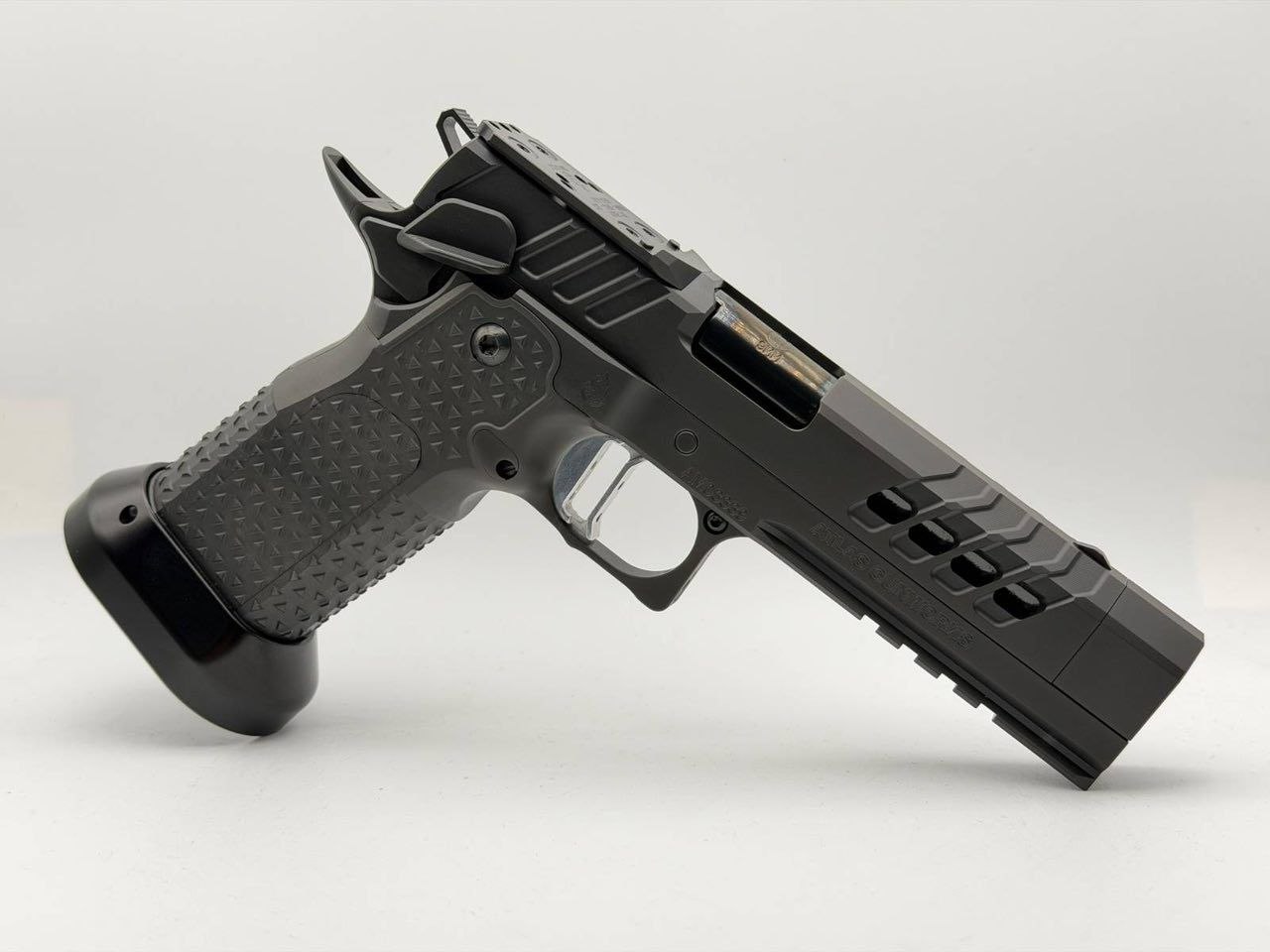
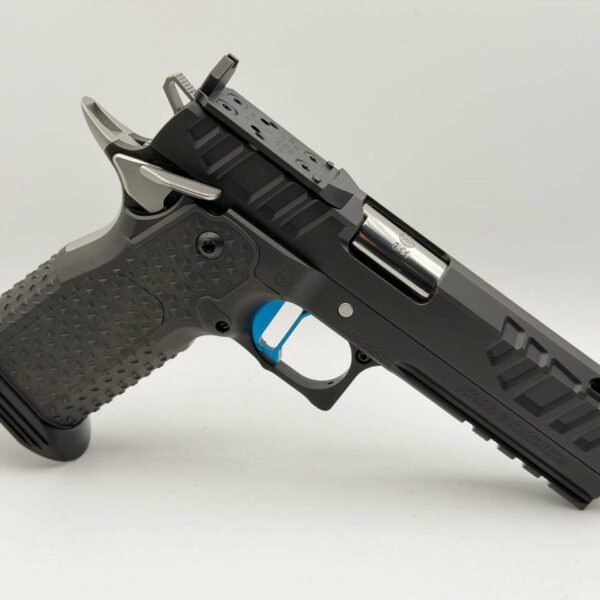
The atlas gunworks arthena v3 two-ton controls the compact proportions of the Athena platform with the updated components associated with Atlas’s V3 generation. The two-tone control configuration adds a contrasting finish to selected controls, creating a visual distinction between the primary frame and individual operating components.
The two-tone treatment can be applied to components such as the thumb safety, magazine release, slide stop, and other small controls, depending on the specific factory configuration. Because Atlas offers different finishes and configurations, the exact components receiving the contrasting treatment should be verified on the individual pistol.
Beyond appearance, the controls retain their respective mechanical functions within the 2011-style operating system. The manual safety provides the designated safety control, while the magazine release and slide stop perform their conventional functions. Their shape, texture, and finish can contribute to the overall ergonomic character of the pistol.
The Athena V3’s two-tone presentation also highlights the detailed machining of the controls. Contrasting finishes can make individual components more visually prominent, particularly around the frame and grip area. This creates a deliberate separation between the primary firearm finish and selected controls without changing the fundamental operating design.
For accurate cataloging, the description should distinguish the factory two-tone configuration from aftermarket refinishing or replacement components. Finish, control type, optic configuration, sights, grips, and other options can vary between individual Athena V3 pistols.
The V3 designation is also important when identifying the firearm because Atlas has produced earlier Athena generations with different component specifications. Consequently, the model generation and exact factory configuration should be recorded together whenever possible.

atlas gunworks arthena v3 two-ton controls
Overall, the Athena V3 with two-tone controls presents a combination of modern 2011-style construction and contrasting component finishes. The two-tone controls provide a distinctive visual detail while remaining integrated into the pistol’s established control layout and overall design.
Atlas Gunworks Athena V3 With Two-Tone Controls
The Atlas Gunworks Athena V3 is a compact 2011-style pistol that combines the established operating architecture of the double-stack 1911 family with the component and manufacturing updates associated with Atlas Gunworks’ V3 generation. In a two-tone configuration, selected controls receive a contrasting finish, giving the pistol a visually differentiated appearance while retaining the underlying mechanical arrangement of the platform.
The Athena name has been used across multiple Atlas configurations, so the V3 designation is important when documenting a particular example. Earlier Athena models and later V3 examples should not automatically be treated as identical. Component specifications, sight arrangements, optic interfaces, finishes, and control configurations can vary between generations and individual factory orders.
The two-tone control treatment is primarily a configuration detail. It can make selected operating components stand out against the primary finish of the frame and slide. Depending on the exact factory specification, contrasting treatment may appear on components such as the thumb safeties, magazine release, slide stop, or other controls. The exact components should therefore be confirmed from the specific firearm or its factory documentation.
V3 Generation
The V3 designation identifies a particular stage in the development of Atlas Gunworks’ pistol lineup. Atlas has published information about V3 changes, including revisions to its front-sight system and optic-plate arrangement.
Those updates are relevant when distinguishing an Athena V3 from an earlier Athena. The generation should therefore be recorded as part of the product identity rather than treated as a minor naming variation.
A complete catalog entry can identify the manufacturer, model, generation, chambering, finish, sight configuration, optic arrangement, grip configuration, safety configuration, and control finish. This creates a more reliable record than using the model name alone.
The V3 generation also demonstrates the broader trend toward modularity in modern 2011-style pistols. Individual components can be configured for different preferences, and Atlas offers multiple combinations of finishes and controls.
Two-Tone Control Configuration
The defining feature of the configuration described here is the contrasting finish applied to selected controls.
A two-tone finish generally means that the primary firearm surfaces use one finish while selected components use another. On a premium 2011-style pistol, the contrast can be subtle or pronounced depending on the colors and surface treatments selected.
The treatment can emphasize components that would otherwise blend into the frame. As a result, controls such as the thumb safety, slide stop, and magazine release can become visually distinct.
However, the two-tone treatment does not necessarily indicate a different mechanical system. A differently finished component still performs the same basic function unless the underlying component itself has been changed.
For that reason, product descriptions should separate finish from function. The finish identifies the visual configuration, while the component specification establishes what the control actually is.
Thumb Safety
The thumb safety is one of the most recognizable controls on a 2011-style pistol. In the Athena V3, the exact safety configuration can vary depending on the factory order.
A two-tone thumb safety can provide a visible contrast against the surrounding frame. This can make the control easier to identify visually without changing its fundamental purpose.
Atlas pistols may also be configured with different safety arrangements and biases. Therefore, a listing should specify whether the pistol uses an ambidextrous configuration and whether any particular side is biased, if that information is available.
The safety should always be operated according to the manufacturer’s instructions. It is a critical firearm component, and fitting or modification should be performed by an appropriately qualified professional.
Slide Stop
The slide stop is another component that can receive a contrasting finish in a two-tone configuration.
Its primary mechanical role is to interact with the slide and frame during the operating cycle. When the slide reaches its rearward position under appropriate conditions, the slide stop can engage the corresponding notch and hold the slide open.
From an appearance standpoint, a contrasting slide stop creates a visible accent on the side of the frame. This can contribute to the overall two-tone presentation without changing the fundamental appearance of the slide itself.
The precise finish and material should be verified for an individual firearm because aftermarket replacement parts can look similar to factory components.
Magazine Release
The magazine release is another possible contrasting control. Its position and geometry are familiar to users of the 2011 family, although individual designs can vary.
A two-tone magazine release can create a small visual accent along the frame. Depending on the selected finish, the contrast may be subtle or immediately apparent.
For catalog purposes, the magazine release should be identified separately from the magazine itself. A contrasting release does not establish the capacity or specification of the supplied magazines.
Finish Combinations
The visual effect of a two-tone Athena V3 depends heavily on the finishes selected.
A dark primary finish paired with a lighter control finish can produce a strong contrast. Conversely, two closely related finishes can create a more understated appearance.
The term “two-tone” alone therefore does not provide enough information to identify the exact finish. A complete listing should ideally specify the primary finish and the contrasting control finish when the factory documentation provides those details.
Photographs can assist with identification, but lighting can alter the appearance of metallic and coated surfaces. Factory documentation is preferable when determining the original configuration.
Machined Controls
Atlas Gunworks’ approach to premium 2011-style pistols places considerable attention on individual components. Controls can have carefully shaped edges, defined surfaces, and specific texturing.
The two-tone finish can emphasize these details by creating a visual separation between the control and the surrounding frame.
This is especially noticeable on small components because a contrasting finish can make their outlines easier to see in photographs.
Nevertheless, appearance should not be confused with mechanical performance. A finish is primarily a surface characteristic, while the underlying dimensions, fitting, material, and geometry determine the mechanical properties of the component.
Grip and Frame Relationship
The controls are positioned around the frame and grip area, making their relationship to the shooter’s hand an important aspect of the pistol’s overall design.
The Athena’s compact format gives the frame a different visual and ergonomic character from longer full-size 2011-style pistols. The exact grip length, texture, and material can vary by configuration.
Two-tone controls can add another layer of visual separation within this area. When the controls contrast with the frame and grip, the individual components become more prominent.
However, grip comfort and control accessibility are subjective. Different users can have substantially different preferences based on hand size, grip technique, and prior experience.
atlas gunworks arthena v3 two-ton controls
Sight and Optic Configuration
The two-tone control configuration is separate from the sight and optic configuration.
A particular Athena V3 can be documented with conventional iron sights, an optic-ready arrangement, or an installed reflex optic depending on the factory or subsequent configuration.
Atlas’s V3 generation introduced changes to the sight and optic systems, making the V3 designation useful when identifying a particular pistol.
For a complete product record, the optic configuration should therefore be listed independently from the two-tone finish. A pistol may have two-tone controls with or without an installed optic.
Factory Configuration Versus Modification
This distinction is especially important for premium firearms.
A two-tone appearance visible in photographs does not necessarily prove that the firearm left the factory in that configuration. Controls can be replaced, refinished, or upgraded after purchase.
A reliable product description should therefore distinguish among: atlas gunworks arthena v3 two-ton controls atlas gunworks arthena v3 two-ton controls atlas gunworks arthena v3 two-ton controls atlas gunworks arthena v3 two-ton controls atlas gunworks arthena v3 two-ton controls atlas gunworks arthena v3 two-ton controls atlas gunworks arthena v3 two-ton controls atlas gunworks arthena v3 two-ton controls atlas gunworks arthena v3 two-ton controls atlas gunworks arthena v3 two-ton controls atlas gunworks arthena v3 two-ton controls.
-
Factory-installed components
-
Factory-selected finishes
-
Dealer-installed accessories
-
Aftermarket components
-
Later refinishing
-
Owner modifications
This information can be especially valuable when documenting a used Athena V3.
If the original factory specification is known, it should take precedence over assumptions based on appearance.
Product Identification
The most useful way to identify the firearm is to combine the manufacturer and model with the generation and configuration.
For example, “Atlas Gunworks Athena V3” establishes the basic product identity, while “two-tone controls” describes a particular finish configuration.
Additional information can then identify the caliber, barrel configuration, sight system, optic arrangement, safety configuration, grip treatment, and other components.
This layered approach reduces confusion between visually similar firearms.
Manufacturing Details
Atlas Gunworks operates within the premium 2011-style pistol market, where component fitting and detailed machining are significant parts of product construction.
The Athena V3’s appearance reflects this manufacturing approach through its machined slide, frame components, controls, grip system, and sight interfaces.
The exact manufacturing specifications should be taken from Atlas’s current documentation for the relevant model year. Older specifications may not apply to later production.
Likewise, product listings should avoid combining specifications from different Athena generations.
Configuration Changes Over Time
Manufacturers sometimes update individual components without completely changing a model name. Consequently, production year and generation can be useful identifiers.
The V3 designation helps establish a particular design generation, but even within a generation, factory options can create differences among individual pistols.
A collector or catalog manager should therefore record the exact configuration whenever possible.
This can include photographs of both sides of the firearm, the top of the slide, the grip, controls, sights, and any optic mounting components.
Collector Documentation
A high-quality product record can include: atlas gunworks arthena v3 two-ton controls atlas gunworks arthena v3 two-ton controls atlas gunworks arthena v3 two-ton controls atlas gunworks arthena v3 two-ton controls atlas gunworks arthena v3 two-ton controls atlas gunworks arthena v3 two-ton controls atlas gunworks arthena v3 two-ton controls atlas gunworks arthena v3 two-ton controls atlas gunworks arthena v3 two-ton controls atlas gunworks arthena v3 two-ton controls atlas gunworks arthena v3 two-ton controls atlas gunworks arthena v3 two-ton controls atlas gunworks arthena v3 two-ton controls atlas gunworks arthena v3 two-ton controls.
-
Manufacturer
-
Model
-
Generation
-
Caliber
-
Serial number where legally appropriate
-
Finish
-
Control finish
-
Safety configuration
-
Sight configuration
-
Optic configuration
-
Grip material
-
Grip finish
-
Trigger configuration
-
Magazine configuration
-
Factory accessories
-
Original packaging
-
Factory documentation
-
Condition
-
Known modifications
These details can be particularly useful when the firearm is transferred between owners or evaluated later.
Condition Description
Condition should be described using observable characteristics.
A product record might document finish wear, scratches, dents, corrosion, grip wear, evidence of modification, sight condition, and visible wear on controls.
Terms such as “excellent” or “mint” should be supported by specific observations rather than used as unsupported marketing language.
For a used firearm, internal mechanical condition should not be asserted without appropriate inspection.
Maintenance Considerations
Routine maintenance should follow the manufacturer’s instructions.
The owner should use only appropriate cleaning materials and procedures for the firearm’s components and finish. The safety, trigger, slide, barrel, and other critical components should not be altered without appropriate technical expertise.
Atlas provides service resources for its pistols, and manufacturer support can be particularly relevant for fitted or specialized components.
A product description should not substitute for the owner’s manual. Instead, it should provide an identification and configuration reference.
Safety Considerations
The Athena V3 is a firearm and should be handled accordingly.
It should be treated as loaded until its condition has been personally verified. The muzzle should be kept pointed in a safe direction, and the trigger should not be touched except when appropriate under established firearm-safety procedures.
Secure storage is also important. The firearm should be kept inaccessible to unauthorized individuals and transported according to applicable laws.
The manufacturer’s instructions should be followed for operation, maintenance, disassembly, and storage.
Two-Tone Appearance in Product Photography
Photography can have a significant influence on how a two-tone finish is perceived.
Metallic surfaces may appear lighter or darker depending on the light source, while coated surfaces can show different levels of reflection. As a result, photographs taken under different conditions may make the same finish appear substantially different.
For accurate documentation, photographs should ideally be taken under consistent lighting and from several angles.
The controls should be visible clearly enough to identify their finish and configuration.
Catalog Description
For a catalog or reference database, the Athena V3 can be described as a compact 2011-style pistol configured with contrasting finishes on selected operating controls.
The two-tone treatment provides an identifiable visual characteristic without changing the basic identity of the Athena V3 platform.
The exact finish combination should be recorded whenever known. If the finish cannot be verified, the listing should simply state that the example has contrasting or two-tone controls rather than assigning an unsupported color or coating specification.
Distinguishing the Model From Other Atlas Pistols
Atlas Gunworks produces several models within its 2011-style pistol family. Consequently, the Athena name should not be used interchangeably with other Atlas models.
The Athena’s configuration and generation should be recorded precisely, particularly when comparing it with models that have different frame dimensions, barrel configurations, or intended roles.
Likewise, a two-tone control package can appear across different Atlas models. The finish alone therefore cannot establish that a firearm is an Athena.
The model designation, frame characteristics, markings, documentation, and configuration should be considered together.
Final Product Overview
The Atlas Gunworks Athena V3 with two-tone controls combines a compact 2011-style platform with a contrasting control configuration. Its defining visual characteristic is the separation between the primary firearm finish and selected operating components.
The two-tone treatment can highlight the thumb safety, slide stop, magazine release, or other controls depending on the exact factory specification. These components retain their normal mechanical functions, while the contrasting finish gives them a distinct visual identity.
The V3 generation adds another important layer to the product description. Atlas introduced changes to its sight and optic systems during the V3 evolution, so identifying the generation helps distinguish the pistol from earlier Athena configurations.
For accurate documentation, the firearm should therefore be recorded using the complete model designation together with its actual configuration. Finish, safety arrangement, sight system, optic interface, grip configuration, and factory or aftermarket components should all be verified individually.
The result is a product description that treats the Athena V3 as a configurable premium 2011-style pistol rather than assuming that every example carries identical equipment. This approach is particularly useful for catalog listings, collector records, product databases, and reference material where precise identification is more valuable than generalized claims.
Ultimately, the two-tone control configuration is one component of the Athena V3’s broader design language. It provides a contrasting visual treatment while remaining integrated into the pistol’s established control architecture. The firearm, Atlas Gunworks’ current documentation should remain the authoritative source for specifications, configuration, service requirements, and safety V3 designation, meanwhile, identifies the generation and its associated component updates.

Reviews
There are no reviews yet.